




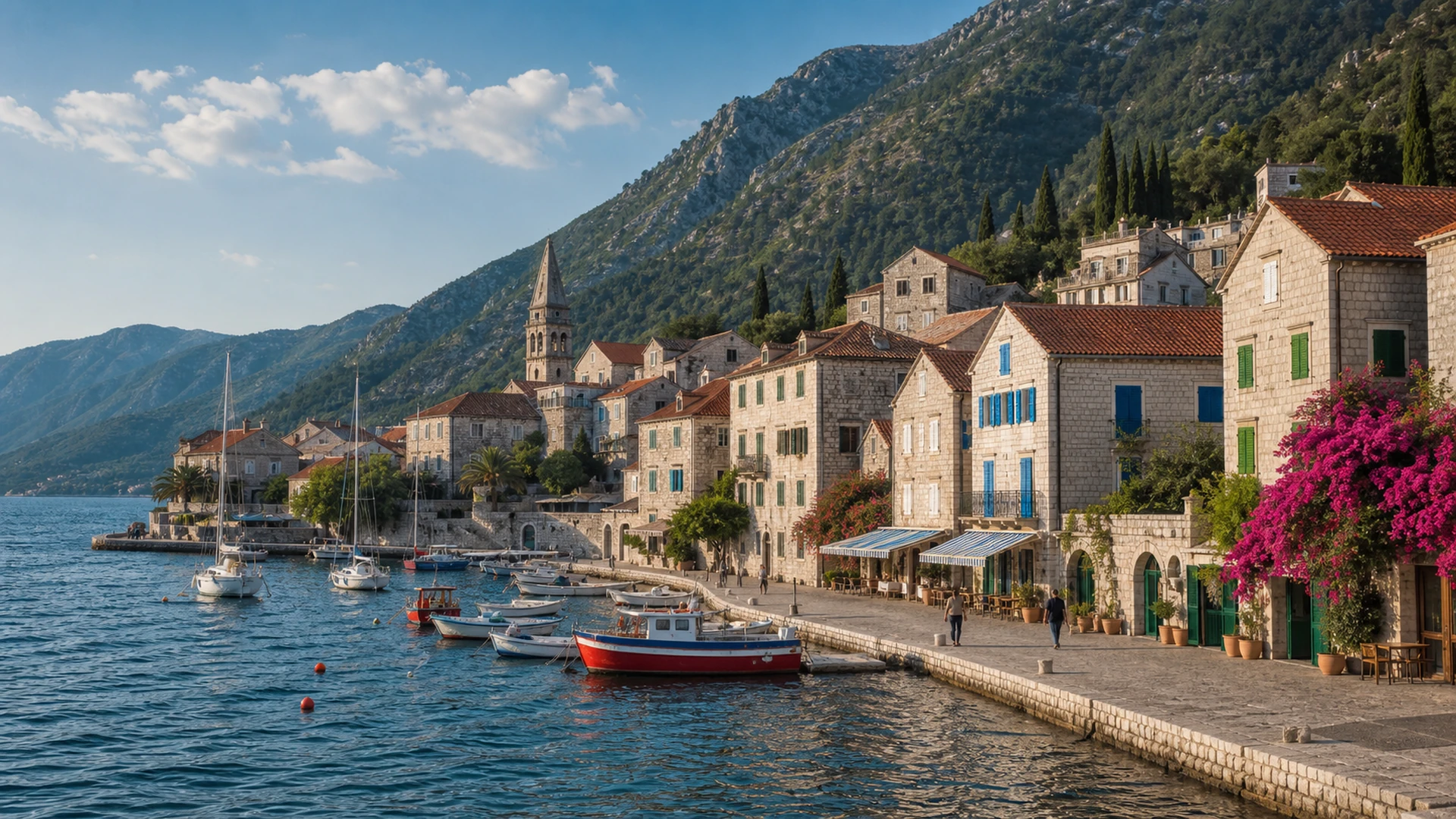
Moving to Montenegro: A Step-by-Step Relocation Guide for Remote Workers
Moving to Montenegro is a logistics project, not a leap. The country sits on the Adriatic, uses the euro, admits most Western passport holders without a visa for a short stay, and costs less than almost anywhere else on the Mediterranean coast. What it doesn’t hand you is the order in which things happen.
In this story
This guide is that order, written for people who work remotely: freelancers, employees on distributed contracts, founders, and small teams looking for a base in the Balkans. It covers why people come, where they end up living, what the paperwork sequence looks like in practice, and the part most relocation guides skip — where you sit down and do your job once the suitcases are unpacked.
One thing you won’t find here: legal thresholds, tax rates or income requirements. Montenegro amended its rules on foreigners at the end of 2025, and those numbers move. Where a rule matters, this guide says so and points you at the person who should confirm it.
Why are people moving to Montenegro?
The honest answer is a combination that’s hard to find elsewhere in Europe: a warm coastline, the euro without the eurozone price level, short flights to most of the continent, and a country small enough that you can drive from the Croatian border to the Albanian one in an afternoon.
For remote workers, three things carry more weight than the scenery. The cost of a decent life is well below Western Europe, which stretches a foreign salary or a client roster billed in euros. Time zones line up with the rest of Europe and stay workable for the US East Coast. And the country actively courts remote workers — Montenegro runs a residence route aimed squarely at people who earn their income abroad.
Who it doesn’t suit is just as clear. If you want a large city with a deep job market, this isn’t it — Podgorica is the capital and it’s small. If you need a dense international nomad scene running year-round, the sort that fills co-living houses in Lisbon or Bali, you’ll find something quieter and more improvised. And if administrative friction wears you down, the counters here will test you.
What is living in Montenegro actually like?
Most of what surprises new arrivals isn’t in the brochure. Three things shape daily life here more than anything else.
The coast runs on two seasons
Between June and September the coastal towns fill up, rents jump, restaurants run at capacity and the single coastal road turns into a queue. From October the crowd drains away, prices fall, and a good share of the seasonal businesses simply close until spring. Both versions of the country are real, and you should meet both before signing anything long-term.
For someone who works here rather than holidays here, the quiet half of the year is the better half — cheaper, calmer, easier to concentrate in. The catch is that whatever infrastructure you rely on has to survive the off-season. A café that shuts in October is not a workplace.
Language, English and the paperwork counter
Montenegrin and Serbian are mutually intelligible; either one gets you through a conversation, and Croatian will do at a push. English is common along the coast and among younger professionals, and much thinner inland and behind an administrative desk.
The practical consequence: you can live comfortably in English and still find yourself unable to complete a form. Most new arrivals solve this the same way — they use a local lawyer or agency for anything official and save their own Montenegrin for the market and the neighbours.
Safety, healthcare and getting around
Montenegro is a small country with a strong social fabric, and it reads that way day to day: violent crime is rare, and the usual caution around crowded tourist areas in August is about the extent of it.
Healthcare comes in two layers. The public system exists and residence-permit holders can use it, but waiting times push most foreigners toward private clinics, usually backed by private or international insurance. What that insurance must cover is a legal question that changes — ask a broker who works with foreigners here, not a forum.
Transport is the one that catches people out. Buses run between the coastal towns and are fine for an unhurried trip, but they run late often enough that you shouldn’t plan a meeting around one. Outside Podgorica and the main coastal strip, a car stops being a convenience and becomes the thing that makes your week work.
Where to live: choosing a base that works year-round
Almost every guide compares Montenegrin towns by charm. For someone relocating to work, a more useful filter is whether the town functions in February.
Budva is the largest town on the coast and one of the few that stays awake all year. It has the density that makes ordinary life easy — supermarkets, clinics, banks, gyms, courier drop-offs, a working centre — plus an airport half an hour away. In August it’s the busiest place in the country; the rest of the year it’s a small, functional coastal city.
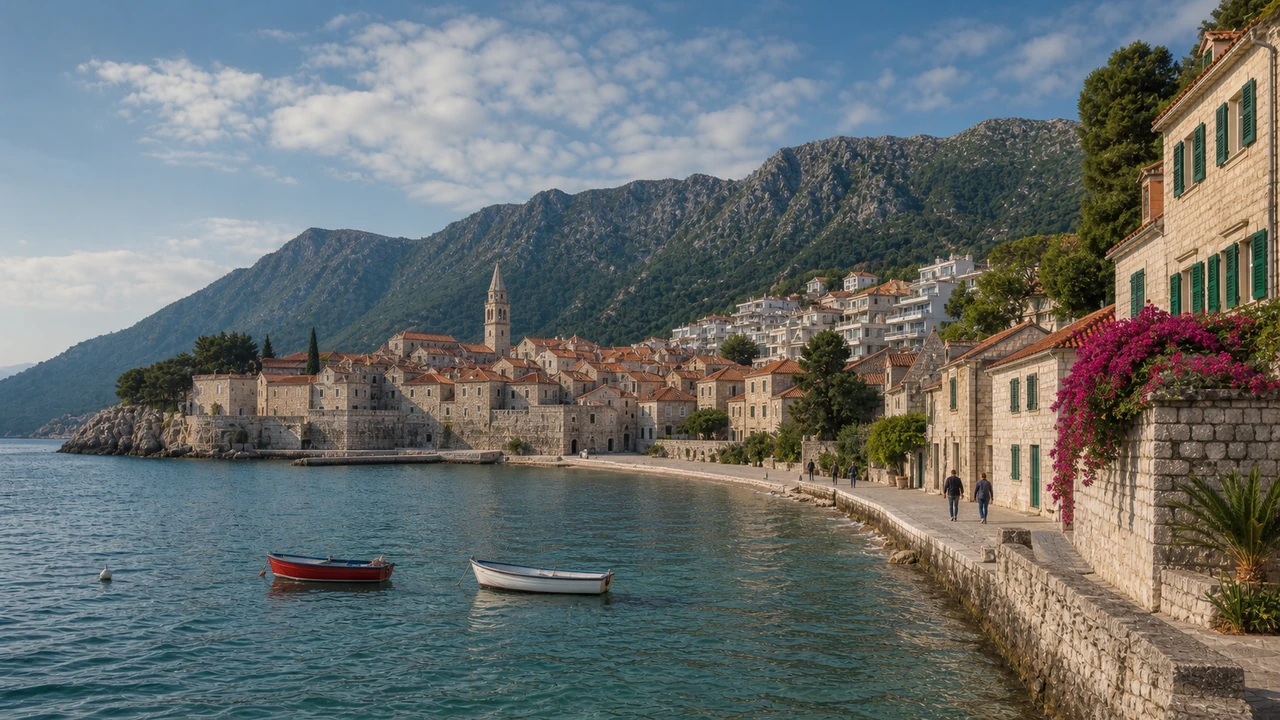
Kotor gives you the UNESCO postcard and a tight international community, at the cost of cruise-ship crowds in season, less direct sun in winter because of the mountain wall, and a bay that empties out considerably once the tourists leave.
Tivat is the modern option, built around the marina, with the best year-round international amenities on the bay and the closest thing to an international school scene on the coast. It’s also the most expensive way to live by the water.
Herceg Novi trades some convenience for a lower cost of living and easy access to Croatia. Bar is a working port town, cheaper still, with the ferry to Italy and the rail line inland. Podgorica is where the ministries, the main hospitals and the best schools are — the sensible choice if your life involves official business more than sea views.
The relocation sequence, step by step
Here is the part that guides tend to leave as a pile of topics rather than an order. The sequence below is the one most remote workers actually follow.
1. Sort your documents before you fly
Whatever residence route you take, the same documents keep appearing: a criminal-record check from your home country, birth and marriage certificates, proof of income or company documents — and most of them need an apostille and a certified translation. All of that is far easier to obtain while you’re still in the country that issued them.
Get the apostilles done before you leave. Sending a document home for legalisation from Montenegro turns a two-day errand into a three-week one.
2. Arrive on your visa-free stay and rent something temporary
Most Western nationals can enter and stay for a limited period without a visa, which is enough time to look around properly. Don’t sign a year-long lease from abroad. Take something short-term for the first four to six weeks, then walk the neighbourhoods you’re considering, at the hour you’d actually be commuting or shopping.
Long-term rentals are still largely an in-person, word-of-mouth market. Listings sites show you a fraction of the stock, and much of that fraction is priced for tourists. Landlords negotiate very differently when you’re standing in the flat in November than when you’re an email in July.
3. Open a bank account and register your address
A local bank account is one of the first practical steps, and it interacts with everything else — rent, utilities, your residence application, invoicing local clients. Banks will want identification, proof of where you live, and a clear answer about where your money comes from.
Registering your address with the authorities is a separate obligation and a short errand, usually handled with your landlord. Whether the bank account or the residence application comes first depends on which route you’re taking — settle that question with whoever files your paperwork, not with a forum.
4. Apply for temporary residence
Montenegro offers several routes to temporary residence: employment, forming a company, family reunification, property ownership, and a permit aimed at people who work remotely for clients or employers abroad. Each has its own document list, and the rules were amended at the end of 2025 — including the property route, which is no longer the automatic option that older articles describe.
This is where a local lawyer earns their fee. The requirements are specific, they’re enforced literally, and a rejected file costs you months.
5. If you’re relocating as a company or a team
Teams have a different sequence. Forming a Montenegrin company is both a residence route and the practical way to invoice, hire and open business banking here — which means the company usually has to exist before the people are settled. A company needs a registered address in Montenegro from day one, and that address is what banks, the tax authority and your counterparties will use to find you.
For a team of any size, the workspace question also arrives earlier than expected. People land, and then they need somewhere to work from on Monday.

Where will you actually work?
This is the question relocation guides forget, and the one that decides whether the move holds. You can solve housing, banking and residence and still spend your first three months working badly.
Home, cafés and the seasonal problem
Working from the flat is the default, and it works until it doesn’t. Rental apartments here are furnished for holidays: a dining chair, a low table, a router placed for the television. Fixed and mobile internet in the coastal towns is solid, but connections in tourist-heavy areas slow down in peak season, and an apartment’s own line is nobody’s priority to fix in August.
Cafés carry you for a while, then run into the season. In summer they’re too loud for a call; in winter half of them are closed. Neither is a foundation for work you’re being paid for.
What a coworking space solves
A coworking space fixes the three things a flat and a café can’t: a connection that someone is responsible for, a room where a video call doesn’t embarrass you, and a reason to leave the apartment. The third matters more than new arrivals expect — relocation is isolating, and a desk among other working people is the fastest way to meet the people who’ll answer your questions about landlords, accountants and where to get a car serviced.
What to check before you commit: that the space runs year-round rather than seasonally, that it has a business internet contract and a backup line, that there’s a quiet zone and a bookable room for calls, and that you can start by the day instead of signing for a month. In Budva that combination sits in the centre of town, alongside the banks and the notaries — convenient in a month made of errands.
Meeting clients and hosting your team
Sooner or later you’ll need a room rather than a desk: a client who flies in, a quarterly session with a distributed team, an interview, a lawyer who’d rather meet in person. Doing that from a rented apartment or a beach bar sets exactly the wrong tone, and hotel meeting rooms are priced for conferences.
Booking a meeting room by the hour, in a building with a proper address, solves it cheaply — and gives a small team somewhere to gather when everyone converges for a week.
Why a business address matters once you settle
Nobody mentions this until it’s urgent. If you register a company in Montenegro, that company needs a registered address — a real, verifiable one in the country. Your rented flat can technically serve, and it’s usually a bad idea: the address ends up in a public register, it changes every time you move, some landlords refuse outright, and banks look more carefully at a residential address than a commercial one.
This is what a virtual office is for. It gives your business a fixed commercial address with someone physically there to receive registered letters and couriers, sign for what needs signing, and scan or forward your post while you’re travelling. For a company being set up by people who haven’t finished moving yet, that staffed address is the difference between a process that runs and one that stalls on a letter nobody collected.
It also matters for banking. Opening a business account is the step where a paper trail gets examined, and an address attached to a staffed business centre is easier to explain than a mail-drop or an apartment. If you’re weighing which kind of address you actually need, the distinction between a physical address and a mailing address is worth understanding before you register anything.

Settling in: seasons, community and the first year
The move doesn’t end when the residence card arrives. Two things determine whether the first year sticks.
The first is timing. Arriving in early autumn gives you the whole calm season to sort paperwork, look at flats without competition and negotiate a lease at low-season rates, with summer arriving once you’re already settled. Arriving in June means paying peak prices for everything while queuing behind holidaymakers.
The second is people. Montenegro’s foreign community is small and organised mostly through informal channels — group chats, expat associations, and the handful of places where the same faces turn up every week. That’s an advantage: a country this size means the accountant, the lawyer and the letting agent you need are two introductions away. Being somewhere those introductions happen is the shortcut, and it’s another argument for a shared workspace over the kitchen table.
Making Montenegro work as a base
Relocating here is straightforward if you take it in order: documents apostilled at home, a short first lease, a bank account, your address registered, a residence application handled by someone local, and a working setup arranged early rather than improvised. What people regret is almost always a sequencing error — a lease signed too soon, a document legalised too late, three months of working badly from a holiday apartment.
Settle the work question at the same time as the housing question, not after it. If Budva is where you’re heading, come and see the coworking floor before you decide where to live — a desk you can start using on your first Monday takes a surprising amount of pressure out of the rest of the move.
Frequently Asked Questions
Do I need to buy property to move to Montenegro?
No. Property ownership is only one of several residence routes, alongside employment, forming a company, family reunification and the permit aimed at people working remotely for clients abroad. The property route was tightened at the end of 2025, so check the current conditions with a local lawyer rather than relying on older guides.
Is the internet good enough for remote work in Montenegro?
In the coastal towns and Podgorica, yes — fixed broadband and mobile coverage handle video calls comfortably. Quality varies sharply by building and by season: connections in tourist areas slow down at peak times, and small villages in the bay and the northern mountains are less reliable. If your income depends on being online, keep a backup — a local SIM with data, or a desk somewhere with a business connection.
Are there coworking spaces in Montenegro?
Yes, in Podgorica, Budva and around the Bay of Kotor, though the sector is smaller than in established nomad hubs. The thing to check is whether a space runs year-round rather than seasonally, and whether it has bookable rooms for calls and meetings — that’s what separates a workspace from a café with Wi-Fi.
When is the best time of year to move to Montenegro?
Early autumn. Rents drop once the season ends, landlords negotiate on twelve-month contracts, and the administrative offices are less crowded. Arriving in June means competing with holidaymakers for both flats and appointments, at peak prices.
Do I need a car in Montenegro?
In central Budva or Podgorica you can manage without one, since daily life is walkable and buses connect the coastal towns. Anywhere else, or as soon as your week involves appointments at fixed times, a car stops being optional — the coastal road congests in season and bus timetables are approximate.
Can I use my apartment as my company’s registered address?
Often technically possible, rarely a good idea. The address goes into a public register, it changes every time you move, many landlords won’t allow it, and official letters arrive whether or not you’re in the country to sign for them. A registered business address with staff on site keeps the company’s paperwork in one stable place.
Is Montenegro safe for foreigners?
Yes by most measures — violent crime is rare and the small population means communities are tight. Standard caution around crowded tourist areas in high season covers most of the practical risk.



Leave a Reply