




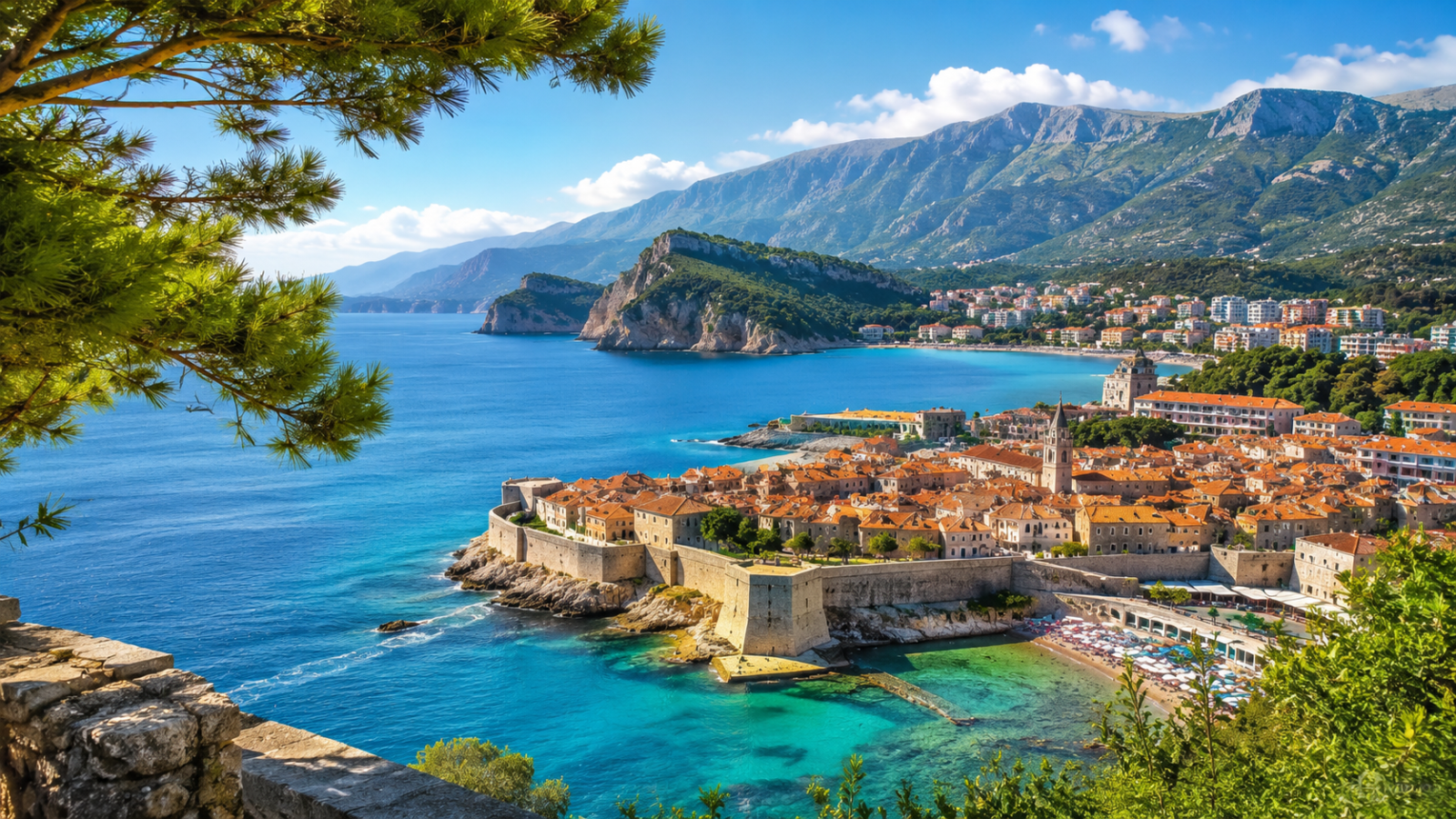
Working Remotely from Montenegro: The Digital Nomad Visa & Relocation Guide
The Montenegro digital nomad visa lets you live on the Adriatic coast while working for clients and employers abroad, on a legal residence permit rather than a string of tourist stays. For remote workers, freelancers, and founders looking for a low-tax European base outside the Schengen 90-day limit, it has become one of the easier routes in the region — and Montenegro pairs it with a low cost of living, the euro, and a short flight to most of Europe.
In this story
This guide walks through what the permit actually is, who can apply, the income and document requirements, the application steps, and how taxes work once you are here. It then covers the part most guides skip: how to set up internet, a bank account, and a place to work day to day, with Budva as the practical example. Visa rules and figures change, so treat the numbers here as a starting point and confirm the current ones with the Ministry of Internal Affairs or a local immigration lawyer before you apply.
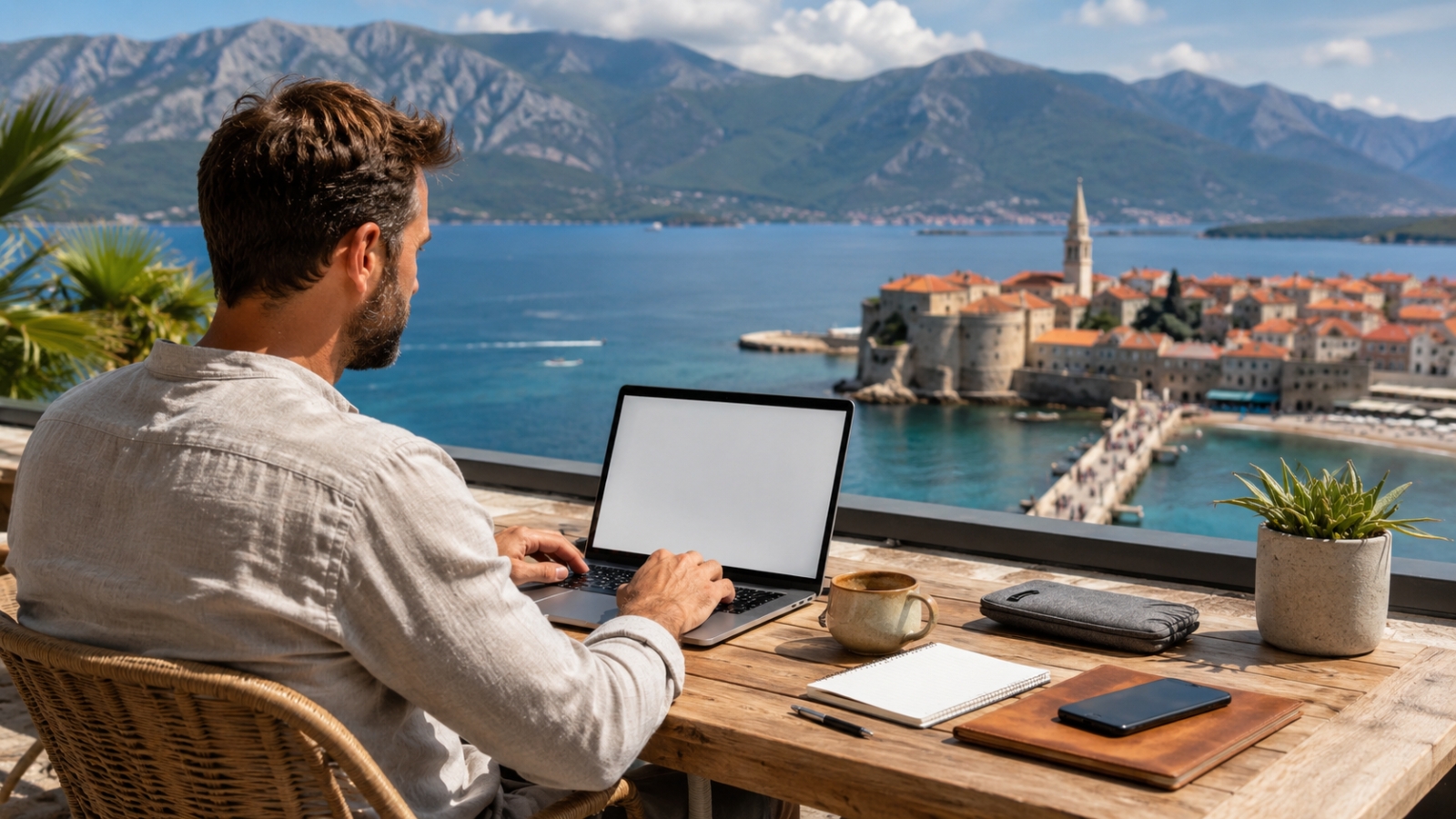
What is the Montenegro digital nomad visa?
Despite the name, it is not a traditional work visa. It is a temporary residence permit for people who earn their income from outside Montenegro — remote employees, freelancers, and owners of companies registered abroad. The permit gives you the legal right to live in the country for an extended period, register an address, open a bank account, and access local services, without the 90-days-in-180 cap that applies to tourists.
The key condition runs through everything else: your work and income must come from foreign sources. You can serve clients in Berlin, London, or New York from a desk in Budva, but you cannot take on Montenegrin clients or work for a local company on this permit. Cross that line and you need a different category of residence and work authorisation.
Who can work in Montenegro as a digital nomad?
The permit is built for three groups, and you qualify as long as the money comes from abroad:
- Remote employees on a contract with a company registered outside Montenegro.
- Freelancers and sole traders serving foreign clients — designers, developers, marketers, writers, consultants, analysts.
- Business owners drawing income or dividends from a company registered in another country.
You do not need a university degree or a specific profession. The authorities verify the work through your contract, invoices, and bank history, not your diploma — so a self-taught freelancer with a steady client base is on the same footing as a salaried engineer. EU citizens have separate free-movement rights and should check which route is simpler for their situation; the nomad permit is aimed mainly at non-EU nationals who would otherwise be limited to short tourist stays.
What are the requirements and income threshold?
Two things decide whether your application goes through smoothly: a complete document set and proof that you earn enough to support yourself.
The documents you need
Requirements are adjusted from time to time, but the core set is stable across applicants:
- A valid passport with enough remaining validity.
- Proof of remote work — an employment contract with a foreign company, or freelance contracts and invoices showing foreign clients.
- Bank statements covering the last three to six months.
- Proof of accommodation in Montenegro — a rental agreement or property ownership.
- Private health insurance valid in Montenegro.
- A criminal record certificate from your home country, apostilled.
Plan for apostilles and certified translations from the start. The criminal record certificate is usually the slowest document to obtain, and anything not in Montenegrin may need an official translation — so order these early rather than discovering the delay at the counter.
How much do you need to earn?
The income requirement is set as a multiple of the Montenegrin minimum wage — roughly three times it — rather than a fixed euro figure. Because the minimum wage has been raised more than once recently, published guides quote anywhere from about €1,350 to €2,700 per month, and they are all describing the same formula at different points in time. The practical reading: budget for a monthly income in the upper part of that range to be safe, and confirm the exact current threshold before you submit, because that single number moves more often than any other part of the process.
How to apply for the digital nomad visa
The process is more administrative than difficult, and for most nationalities it happens inside Montenegro rather than at an embassy beforehand. The usual sequence:
- Gather and legalise your documents — contracts, bank statements, insurance, and the apostilled criminal record, with translations where required.
- Enter Montenegro and register your address. Accommodation has to be registered with the authorities shortly after arrival; if you rent, the landlord usually handles this within the first day.
- Submit the application to the Ministry of Internal Affairs office in the municipality where you live.
- Wait for processing — roughly 40 days is typical, so allow about two months from first document to permit in hand.
- Collect your residence card once approved.
One nuance most checklists gloss over: not every nationality can apply from inside the country. Depending on your passport, you may need to start the process through a Montenegrin embassy or consulate abroad — worth confirming before you book a one-way flight. Coming from a job relocation rather than a solo move changes the paperwork too, and our relocation guide covers that side in more detail.
How long does the permit last, and what about taxes?
The permit is issued for up to two years and can be renewed once for another two, giving a maximum of four years. One detail to plan around: time spent on the nomad permit does not currently count toward the five years needed for permanent residency, so if your goal is a long-term legal base, look at company formation or another residence route in parallel rather than expecting the nomad years to carry over.

Tax is where you need real advice, not a blog rule of thumb. Montenegro taxes worldwide income only for tax residents, and you become one if you spend 183 days or more in the country in a year, or if Montenegro becomes the centre of your vital interests. Foreign-source income earned by a non-resident is generally not taxed locally. From there, the right move splits two ways depending on your home country: some nomads stay under 183 days to avoid triggering Montenegrin tax residency, while others deliberately pass it to make Montenegro their tax home and avoid being taxed elsewhere. Neither is universally correct — it depends entirely on your nationality and where else you owe tax, so confirm your position with a tax adviser before you rely on any exemption.
Where to base yourself — Budva, Kotor or Podgorica?
Montenegro is small, so you can move between regions in a couple of hours, but your base shapes daily life. Podgorica, the capital, has the best infrastructure, the lowest rents, year-round services, and the most administrative offices — practical, if not scenic. Kotor offers the UNESCO old town and a tight-knit community, with rents that swing hard in summer. Budva is the coastal and social hub: beaches, an international crowd, an active nomad scene, and the most developed coworking options on the coast — the trade-off being peak-season prices and crowds in July and August.
If part of your plan is registering a company or simply holding a credible local business address, a virtual office solves the address and mail side without committing you to a full-time lease while you settle in.
Setting up day-to-day: internet, banking and a place to work
The permit gets you in; the practical setup is what makes remote work actually function. Three things are worth sorting in your first weeks.
Internet. Fixed fibre in the cities reaches 100 Mbps to 1 Gbps, and 5G covers Podgorica, Budva, Tivat, Kotor and a few other towns. It is reliable in urban and coastal areas and patchier in villages, so test the connection before signing any lease and keep a local SIM with a data plan as a backup for outages or call-heavy days.
Banking. With your residence permit you can open a local bank account, which is more straightforward in Montenegro than in much of the region. In the meantime, multi-currency accounts like the ones nomads already use abroad cover you for the first few weeks while the paperwork clears.

A place to work. An apartment is fine until the Wi-Fi drops mid-call or the summer heat makes the balcony unworkable, and cafes wear thin after a week of hunched laptop sessions. A coworking space gives you a stable connection, a real desk, meeting rooms for client calls, and — the part that matters most after a solo relocation — other people. In Budva, MonteHub offers open desks you can book by the day before committing to anything monthly, which is also the fastest way to meet the local nomad and founder community.
Wherever you settle, it pays to scout the workspace options before you arrive — what a space charges, whether it offers day passes, and how central it sits all shape your routine more than the listing photos suggest.
Making remote work in Montenegro work for you
Montenegro rewards a bit of planning. Get the income proof and apostilled documents ready early, confirm the current threshold and your tax position with people who handle it for a living, and decide which base fits how you want to live before you commit to a year’s lease. Do that, and you trade the tourist-visa shuffle for a stable European address with a low tax burden and the Adriatic at the end of the workday.
The faster you have a reliable place to work and a few familiar faces, the sooner the move feels like a life rather than a long trip. When you land in Budva, a day pass at MonteHub is an easy first step — a solid desk, fast Wi-Fi, and the local community in one place while you get the rest of your setup sorted.
Frequently Asked Questions
Who is eligible for the Montenegro digital nomad visa?
Non-Montenegrin citizens who work remotely for foreign employers or run a business registered outside Montenegro. You need to show sufficient income, valid private health insurance, proof of accommodation, and a clean criminal record.
What is the income requirement for the Montenegro digital nomad visa?
It is set at roughly three times the Montenegrin minimum wage, so the euro figure shifts whenever the minimum wage changes — recent guides cite anywhere from about €1,350 to €2,700 per month. Confirm the current threshold with the Ministry of Internal Affairs or a local lawyer before you apply.
How long does the permit last, and can it be renewed?
The permit is issued for up to two years and can be renewed once for another two, for a maximum of four years. Time on the nomad permit does not currently count toward permanent residency.
Can I work for Montenegrin clients on this visa?
No. Your income has to come from foreign employers or clients. Taking on local clients or working for a Montenegrin company requires a different residence and work permit.
Do digital nomads pay tax in Montenegro?
Montenegro taxes worldwide income only for tax residents — those who spend 183 days or more in the country or make it the centre of their interests. Foreign-source income earned by a non-resident is generally not taxed locally, but your home-country obligations vary, so check with a tax adviser.
How long does it take to get the permit?
Processing usually takes around 40 days. Counting document preparation, apostilles, and translations, plan for roughly two months from start to permit in hand.


Leave a Reply