




Best Coworking Spaces in Montenegro: How to Find the Right One
Looking for coworking spaces in Montenegro means working through a scene that’s small but growing fast. The country has become one of Europe’s more affordable bases for remote work — Mediterranean coast, the euro, fast fibre in the cities, and living costs 30–50% below Western Europe — and a handful of solid coworking spaces have opened along the coast and in the capital to match. The catch is that they’re scattered across several towns, vary a lot in size and price, and some open only for the summer.
In this story
This guide maps the real options town by town, names the spaces worth knowing in Budva, Tivat, Kotor, and Podgorica, and shows how to find and judge a space once you arrive — including a comparison table to weigh them side by side. Prices move from year to year, so treat the figures here as a guide and confirm current rates before you commit.
Is Montenegro good for remote work?
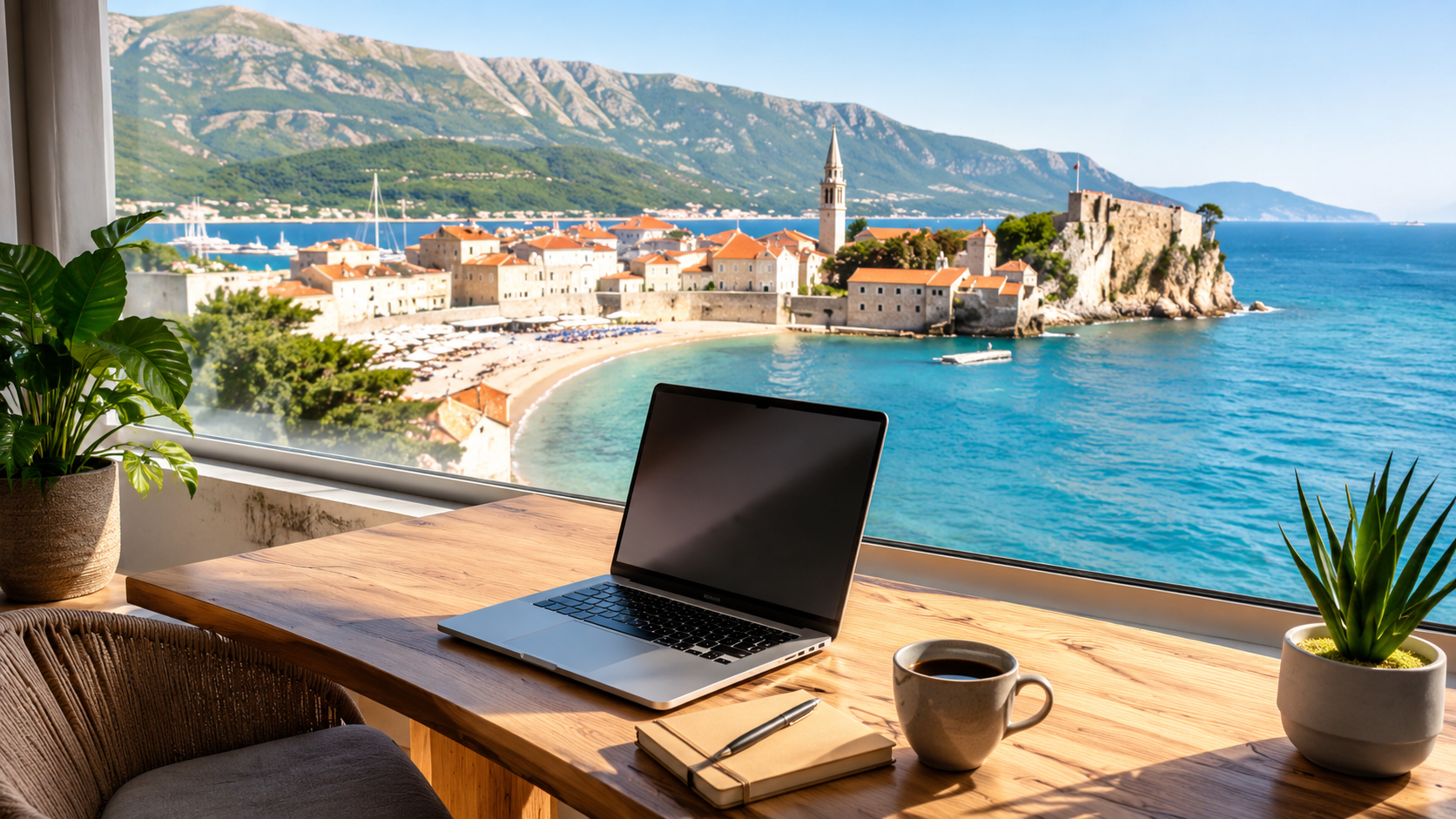
For most people, yes. Home fibre runs 100–500 Mbps for about €20–30 a month, coworking spaces add business-grade connections with backup, and prepaid SIMs with plenty of data cost around €15. The country is safe, visa-free for roughly 100 nationalities for 90 days, and has a dedicated digital nomad residence permit for longer stays. The trade-off is a coworking market that’s still thin compared with Lisbon or Tbilisi — which is exactly why knowing where the good spaces are matters.
Where to find coworking in Montenegro, city by city
The scene clusters in four places: Budva and the rest of the coast for lifestyle, Tivat for the airport and a coliving option, Kotor for the old-town setting, and Podgorica for the densest, most year-round choice. Here’s what each offers.
Budva — the coastal professional base
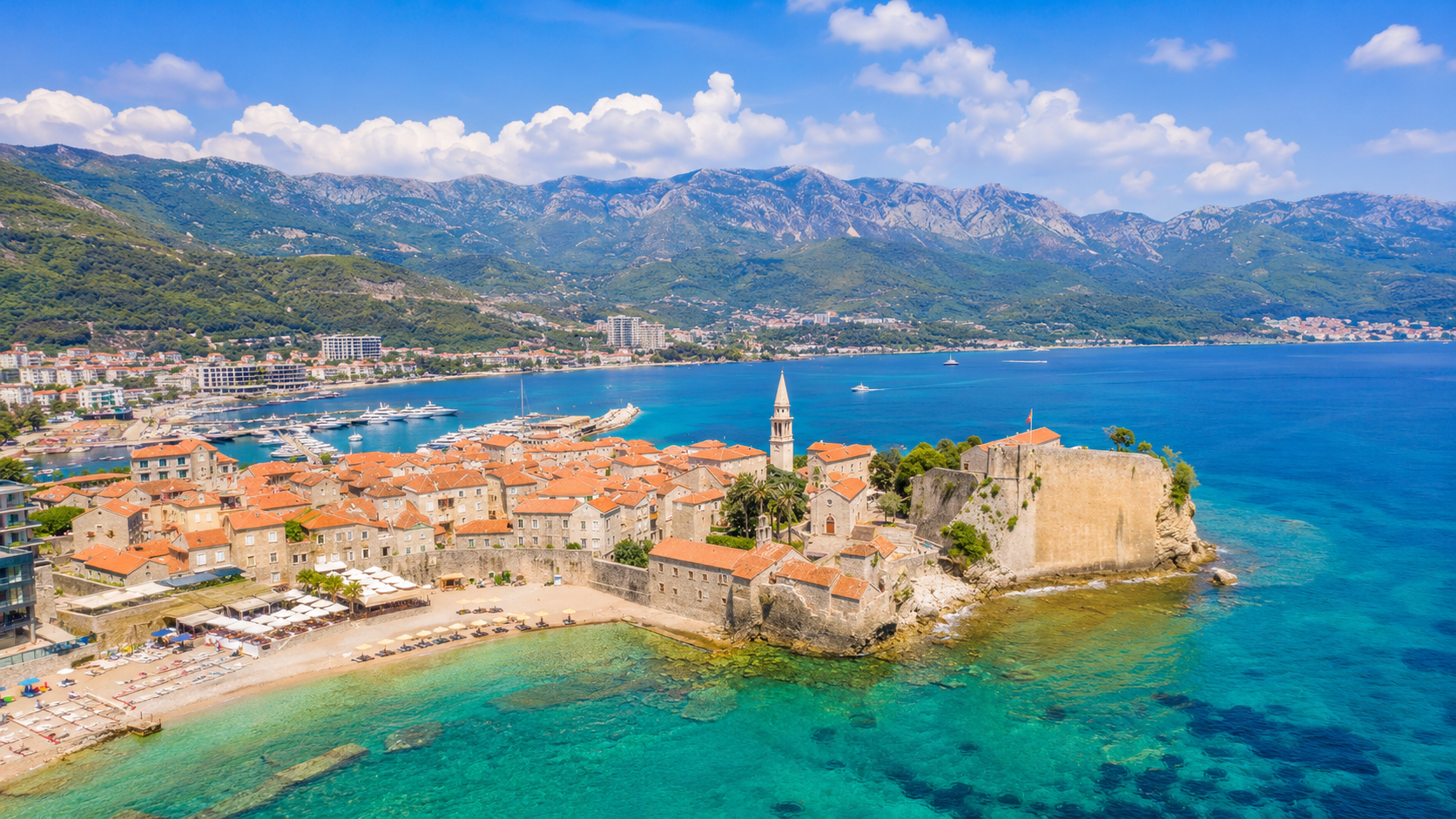
Budva has the most developed coworking on the coast and the best mix of beach, nightlife, work-friendly cafés, and dedicated workspaces. MONTECO sits in the centre with 54+ open desks, private offices, meeting rooms, and a virtual-office service for company registration — built to run year-round rather than just for the summer crowd. AdriaHub is a smaller, quieter room aimed at people who dislike large open-plan spaces, with day passes around €12 and monthly desks from about €180. ITBranch.House leans toward IT specialists and small teams, with desks from roughly €160 a month.
The Bay of Kotor — Tivat and Kotor
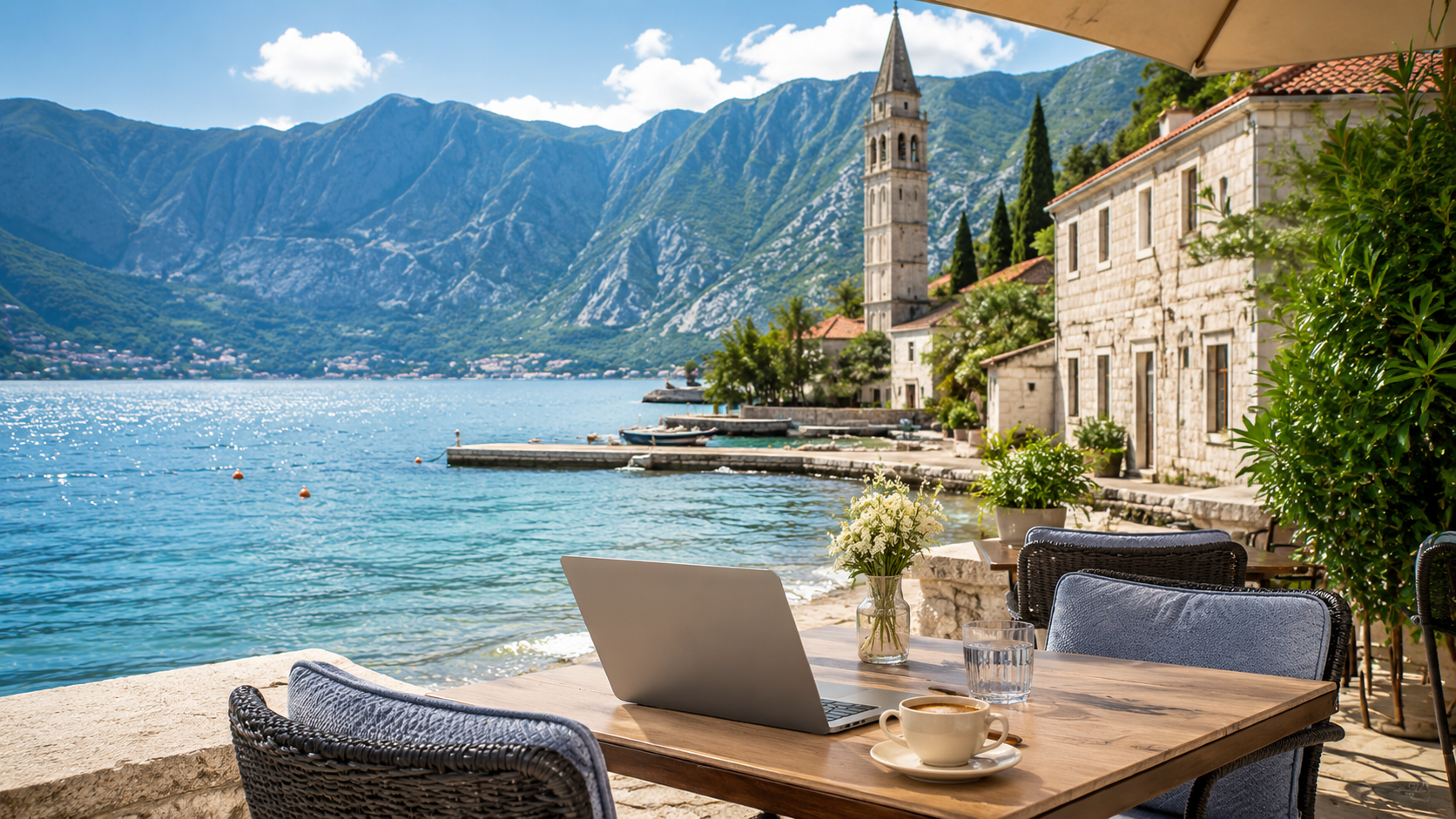
Tivat is handy for its airport and the marina district, and it has a couple of workspaces: Biznis info centar offers hot desks from around €100 a month, the Innovation Centre runs a coworking office, and Playworking blends coworking with coliving on a quiet peninsula — accommodation, fast fibre, and outdoor activities bundled into one package for nomads who want work and lifestyle in the same place. Kotor itself, for all its UNESCO charm, is thin on dedicated coworking; Balkanoffice is the main year-round option, supplemented by seasonal pop-ups in summer. Kotor suits a shorter, scenic stay more than a long-term work base.
Podgorica — the densest, most year-round choice
The capital isn’t on the coast, but it has the cheapest rents, the best infrastructure, and the most coworking. Creative Hub Podgorica is the most established space in the country, with hot desks, dedicated desks, private offices, meeting rooms, and events, and hot-desk membership from about €100–150 a month. NEST Coworking runs flexible plans with day passes around €12 and monthly access from roughly €110. There’s also a government-backed Digitalization Center that sometimes offers subsidised or free access through specific programmes — worth checking if you qualify.
Herceg Novi and beyond
Herceg Novi, Bar, and Ulcinj are quieter and cheaper, with strong café culture but limited dedicated coworking. If you base yourself here, plan to combine a well-equipped home office with the occasional trip to a coworking space elsewhere on the coast. For a settled, full-time workspace, Budva and Podgorica remain the safest bets.
Here’s how the main options compare at a glance. Prices are indicative for 2025–26 and worth confirming directly.
| Space | Town | Type | From (indicative) | Best for |
|---|---|---|---|---|
| MONTECO | Budva | Open desks, private offices, meeting rooms, virtual office | Day pass & monthly; virtual office €280/mo | A year-round professional base on the coast |
| AdriaHub | Budva | Small open space + meeting room | ~€12/day, ~€180/mo | Freelancers wanting a quiet, cozy room |
| ITBranch.House | Budva | Hot & dedicated desks | ~€160/mo | IT specialists and small teams |
| Biznis info centar | Tivat | Hot desks | ~€100/mo | Budget desks near the airport |
| Playworking | Tivat (peninsula) | Coliving + coworking | Package (stay included) | Live-work-outdoors stays |
| Creative Hub | Podgorica | Hot/dedicated desks, offices, events | ~€100–150/mo | Year-round city base, most established |
| NEST Coworking | Podgorica | Day passes + monthly | ~€12/day, ~€110/mo | Flexible city workers |
| Balkanoffice | Kotor | Coworking | On request | Working from the old-town bay |
How to find a coworking space when you land
A directory like the one above gets you started, but the live picture changes — spaces open, close, and run summer-only hours. When you arrive, work through it in order. Start with a map search for “coworking” in your town to see what’s currently open and where. Cross-check a nomad coworking directory for desk types and starting prices. Then turn to people: local digital-nomad and expat groups online are where members post honest takes on noise, Wi-Fi, and community, and where you’ll hear about spaces no directory lists yet. Finally, visit in person before you pay for anything — a single day on site tells you more than any listing.
Coworking, coliving or a café — what’s the difference here?
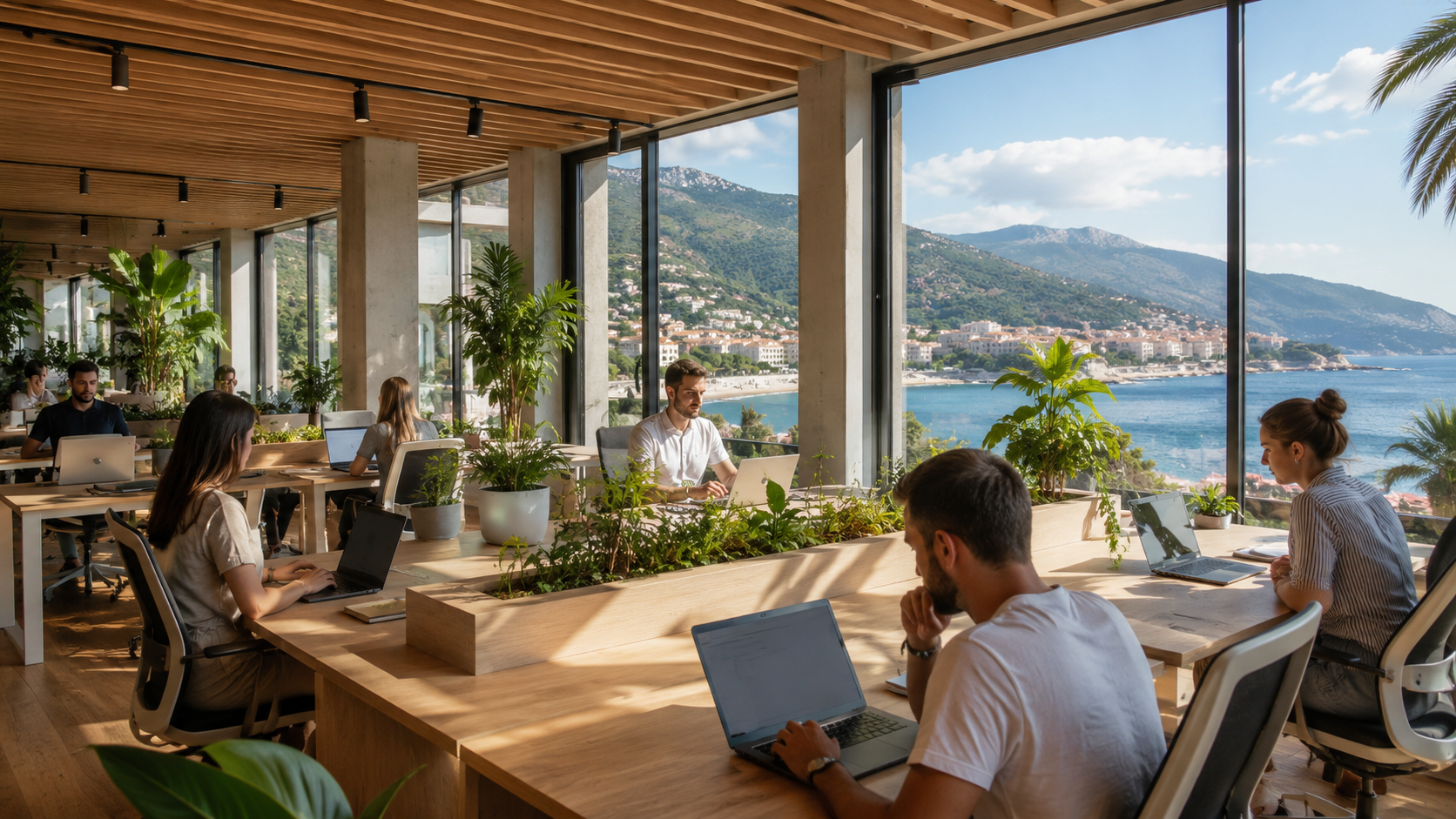
The three get blurred in Montenegro, so it helps to separate them. A coworking space is a professional workspace you pay to use by the day or month — reliable internet, meeting rooms, and a community, with no accommodation attached. Coliving bundles a bed and a workspace into one package, which suits a short, social, all-in-one stay but ties your housing to your desk. Cafés are tempting on the coast, but Balkan café culture is built around slow social coffee, not laptops — power outlets are scarce and staying for hours can feel awkward. For dependable, client-ready work, a dedicated coworking space is the steady option; cafés are a pleasant change of scene, not a daily base.
Day-one logistics: airport, internet and booking ahead
Most coastal arrivals land at Tivat airport, about 16–17 km from Budva — a short taxi or bus ride to the main coworking cluster. Podgorica’s airport runs year-round and sits close to the capital’s spaces. Sort a local SIM at the airport or in town for a mobile-data backup, and if you’re renting an apartment, confirm the fibre actually works before you sign rather than trusting the listing.
One local detail the listings won’t tell you: summer. Budva and Kotor swell with tourists in July and August, desks fill, and short-term prices climb. If you’re arriving for the peak season, reserve your coworking spot and your apartment well ahead.
If you’re also setting up a company or just want a credible local business address without renting a full-time desk, a virtual office covers the address and mail side and adds meeting-room access when you need to show up in person.
It’s a common pairing for newcomers: a virtual office to register the company and handle mail, plus day passes or a desk for the days you want to be among people. If you’re weighing whether the address-only route fits your situation, this explains how it works.
Setting up a base on the Budva coast
Montenegro’s coworking scene is small enough that a little planning pays off: know which town fits how you want to live, line up a workspace before peak season, and check the fibre and the day-pass option before you commit. Get that right and you trade café-hopping and patchy home Wi-Fi for a stable place to work with the Adriatic at the door. If Budva is on your list, the simplest first step is a day pass at MonteHub — spend a morning at a desk, meet the local community, and decide from there.
Frequently Asked Questions
Are there good coworking spaces in Montenegro?
Yes, though the scene is still developing. Budva has the most options on the coast, Podgorica has the densest and most year-round choice, and Tivat and Kotor add a few more. Outside these, dedicated coworking is limited and often seasonal.
How much does coworking cost in Montenegro?
Open-desk monthly rates typically run from about €100 to €200, and day passes are around €12 where offered. Dedicated desks and private offices cost more. Prices shift year to year and tend to rise in the summer, so confirm current rates before committing.
Which city in Montenegro is best for remote work?
Budva is the strongest coastal base for coworking, cafés, and nightlife; Podgorica has the most spaces and the lowest rents year-round; Kotor is beautiful but better for a shorter, scenic stay. Pick by whether you prioritise the coast, year-round infrastructure, or old-town atmosphere.
How do I find a coworking space in a new town in Montenegro?
Start with a map search for “coworking” in your town, cross-check a nomad coworking directory for desk types and prices, then ask in local digital-nomad and expat groups for honest, current takes. Visit in person on a day pass before paying for a membership.
What is the internet like for remote work in Montenegro?
Home fibre in the cities runs 100–500 Mbps for about €20–30 a month, and coworking spaces add business-grade connections with backup. Keep a prepaid SIM (around €15 for plenty of data) as a hotspot for outages or call-heavy days.
Can I just work from cafés in Montenegro?
Occasionally, but not as a daily base. Balkan café culture centres on slow social coffee rather than laptops, power outlets are scarce, and long sessions can feel awkward. For reliable, client-ready work, a coworking space is the steadier choice.


Leave a Reply