





10 Benefits of Coworking Spaces: Why Use One and Who It’s For
The benefits of coworking spaces come down to a simple trade: you swap the cost and commitment of a private lease — or the isolation of working from your kitchen table — for a ready-made professional environment you can join by the day or the month. For freelancers, remote workers, startups, and teams testing a new city, that trade has turned coworking from a niche idea into the default way to work outside a traditional office.
In this story
This guide covers ten concrete reasons people choose a shared workspace, who gets the most out of one, the honest trade-offs worth knowing before you sign, and how to pick a space that actually fits how you work. Where it helps, it draws on what we see day to day at MONTECO in Budva, rather than the usual brochure language.

What is a coworking space, in one minute?
A coworking space is a shared, professionally run office where people from different companies — and the self-employed — work side by side and share the same infrastructure: desks, fast internet, meeting rooms, printing, a kitchen, and usually a community of other members. You pay for access on flexible terms instead of signing a multi-year lease and fitting out a space yourself.
Most spaces offer a few formats: a hot desk (any free seat, the cheapest and most flexible), a dedicated desk (your own permanent spot), and private offices for teams that need walls and a lockable door. With that picture in mind, the benefits below make more sense.
What are the main benefits of coworking spaces?
The advantages stack up across cost, focus, people, and credibility. Here are the ten that matter most in practice.
1. Lower, more predictable costs
A coworking membership folds rent, utilities, internet, cleaning, furniture, and coffee into one monthly figure. There’s no fit-out bill, no deposit on a year-long lease, and no surprise utility spike — useful when you’re a one-person business or a small team that needs to keep overhead flat and known.
2. Flexibility to scale without a lease
You can start with a single hot desk and move up to a dedicated desk or a private office as you grow — or scale back just as easily. For a startup that might be three people this quarter and eight the next, paying only for the desks you use beats being locked into space you’ve outgrown or can’t yet fill.
3. An environment built for focus
Home is full of quiet interruptions — laundry, the fridge, a delivery at the door. A coworking space is built for one thing, and the simple fact of other people working around you creates a quiet accountability that’s hard to manufacture alone. Surveys of coworking members consistently report better focus and output once they leave the kitchen table behind.
4. Networking and collaboration
Sitting near developers, designers, marketers, and founders turns into referrals, advice, and the occasional partnership — the kind of thing that rarely happens over email. A lot of it is unplanned: a conversation at the coffee machine, a question answered by the person at the next desk. Organised events and workshops add a more structured layer on top.
5. Community that cuts isolation
Remote work is flexible, but it can be lonely, and isolation wears down both motivation and mental health over time. A coworking space gives you colleagues again — people to have lunch with, compare notes with, and share a workday rhythm with — without tying you to a single employer.

6. A professional address and client-ready space
A shared workspace gives your business a credible address and proper meeting rooms for the moments that matter — pitching a client, closing a hire, recording a call without a bed in the background. For company registration and mail handling without a full-time desk, a virtual office covers the address side on its own, and adds meeting-room access when you need to show up in person.
7. Structure and a real work/life boundary
Leaving the house to work, even for a ten-minute walk, draws a line between “on” and “off” that home working erases. Members often report the opposite of what you’d expect: they put in fewer hours but get more done, because the day has a shape and an end to it.
8. Amenities without the overhead
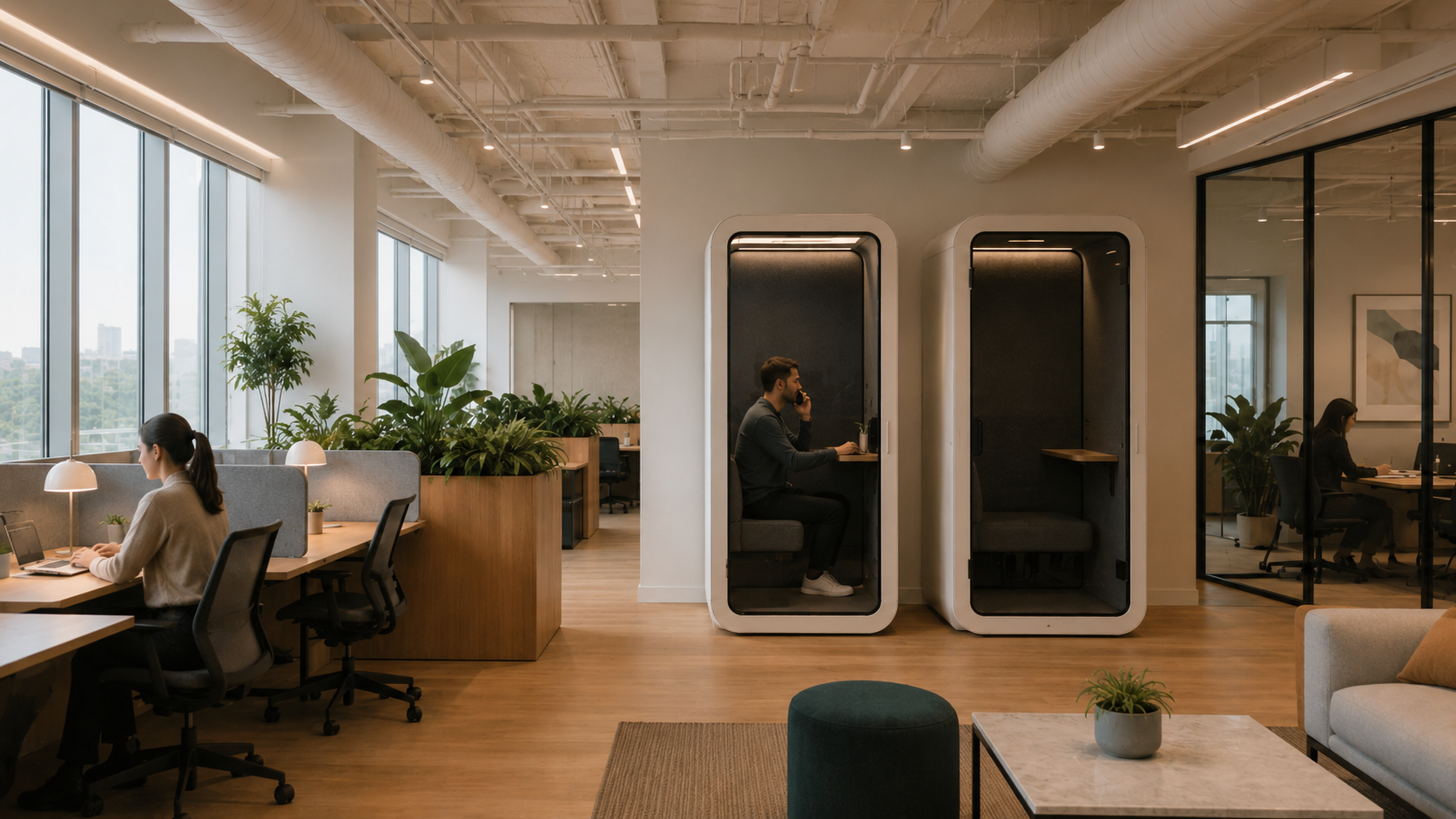
Fast, reliable internet, a backup line, meeting rooms, printing, AV for calls, phone booths, a stocked kitchen — kit that’s expensive and tedious to run yourself comes included and maintained. You get the infrastructure of a well-equipped office without owning or managing any of it.
9. Work from any city — and a soft landing when you relocate
A coworking space is the fastest way to land in a new place. When you arrive somewhere unfamiliar, a desk gives you reliable Wi-Fi from day one and, more importantly, a built-in community — the quickest route to local contacts, advice, and a routine. For anyone relocating as a digital nomad or remote worker, that first week is far smoother with a workspace already sorted.
10. Wellbeing and breaking the home-office rut
The shift out of the house tends to pull other habits along with it — a real lunch instead of grazing at the desk, a proper chair instead of the sofa, a clearer split between work and rest. None of it is dramatic on its own, but over months it adds up to working in a way that’s easier to sustain.
Who gets the most out of a coworking space?
Almost anyone working outside a fixed office, but the fit is strongest for a few groups. Freelancers and contractors get an affordable escape from home distractions and a network of potential collaborators. Remote employees get structure and company without a commute across town. Startups and small teams get room to grow desk by desk, plus meeting rooms for clients and investors. Enterprise teams use coworking to open a satellite presence in a new city without a lease, and relocating nomads get the soft landing described above. If your work needs a laptop, decent internet, and the occasional meeting, a coworking space probably fits.
Are coworking spaces worth it? The honest trade-offs
For most people the answer is yes, but it depends on how often you’ll use the space and which one you pick. The trade-offs are worth knowing up front, each with a way around it. Noise and distraction can be real in an open layout — check whether the space has quiet zones and phone booths before joining. Limited customization means you can’t brand or rearrange a hot desk; if that matters, a private office solves it. Picking the wrong space is the most common regret — the wrong location or crowd makes the membership a waste, which a trial day prevents. And because you’re renting from an operator, their stability matters — choose a space with a settled track record rather than the cheapest pop-up.
How to choose a coworking space that fits
Once you’ve decided coworking is right, the choice between spaces comes down to a short list: location and commute, internet speed and a backup line, the noise culture and whether there are quiet areas, the membership terms and how easily you can scale up or down, what’s genuinely included versus billed as an extra, and the operator’s track record. Flashy perks — beer taps, table tennis — are pleasant but shouldn’t outweigh a fast connection and a quiet room when you need one.
Why coworking works on the Budva coast
On the Adriatic, the benefits sharpen: a stable place to work with fast internet, a community of remote workers and founders, and meeting rooms for client calls — all without committing to a coastal lease that swings with the seasons. Whether you’re settling in for a few months or basing a business here, a shared workspace is the simplest way to get productive and meet people fast. The easiest first step is a day pass at MonteHub — spend a morning at a desk, see how the space feels, and decide from there.
Frequently Asked Questions
What are the main benefits of a coworking space?
Lower and more predictable costs, flexible terms with no long lease, a focused environment, networking and community, a professional address with client-ready meeting rooms, and a clearer work/life boundary. You also get full office amenities without having to run them yourself.
Are coworking spaces worth it?
For most freelancers, remote workers, and small teams, yes — the membership usually costs less than a private lease while adding productivity, networking, and credibility. Whether it pays off depends on how often you use it and on choosing a space that fits your work, so try a day pass first.
Why use a coworking space instead of working from home?
Home has constant low-level distractions and no boundary between work and rest. A coworking space gives you a focused environment, reliable internet and meeting rooms, colleagues to offset isolation, and the structure of leaving the house — which many members find makes them more productive in fewer hours.
Who uses coworking spaces?
Freelancers, remote employees, digital nomads, startups, and small teams, along with enterprise teams running a satellite presence in a new city. Anyone whose work needs a laptop, good internet, and the occasional meeting room is a fit.
What’s the difference between a hot desk and a dedicated desk?
A hot desk is any free seat you take when you arrive — the cheapest and most flexible option. A dedicated desk is your own permanent spot you can leave set up, at a higher price. Teams that want walls and a lockable door choose a private office instead.
What are the downsides of coworking spaces?
Open layouts can be noisy, you can’t brand or customise a shared desk, and a poor choice of space or location can waste the membership. Picking a space with quiet zones, a settled operator, and a trial day handles most of these.



Leave a Reply