




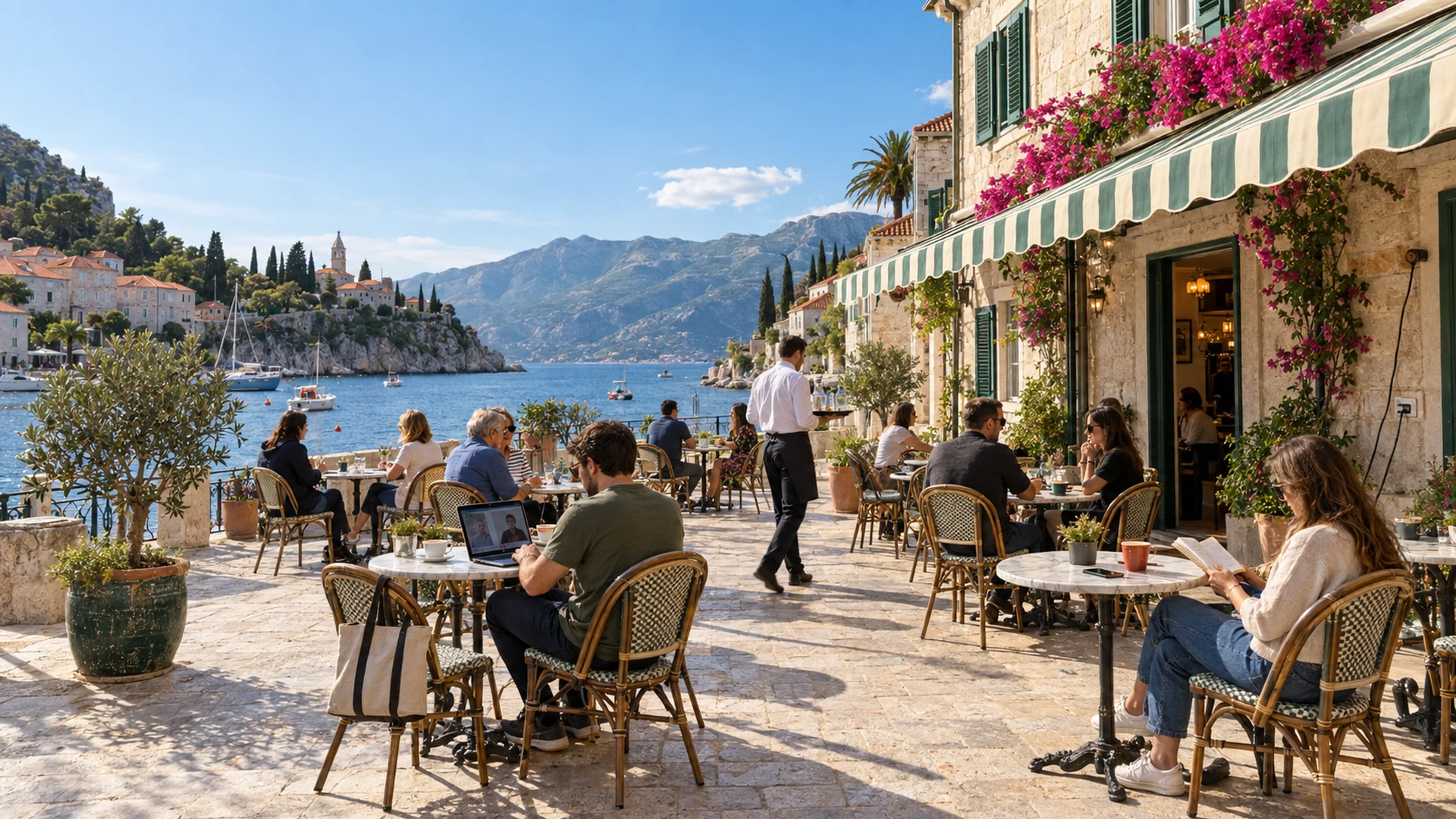
Cafés with Wi-Fi in Budva vs Coworking: Where to Actually Work
Everyone who lands in Budva with a laptop asks the same question in the first week: can I just work from a café? The answer is yes, for a while. Cafés with Wi-Fi in Budva are easy to find, the coffee is good, and nobody will hurry you out. What catches people off guard is how quickly a pleasant café stops being a workplace — usually around the third hour, usually because of a power socket rather than the internet.
In this story
Below: what to check before you sit down, why the season changes everything on this coast, what a full day in a café actually costs once you add up the orders, and the point at which a coworking desk stops being an expense and starts being the cheaper option.
Can you work from a café in Budva?
You can, and the reason it works less well than you expect has little to do with Montenegro’s internet. It has to do with what a Balkan café is for. Coffee here is a social ritual — an hour with a friend, a slow espresso, a conversation. The room is built around that. The tables are small, the chairs are built for twenty minutes, and the laptop culture that shaped cafés in Berlin or Lisbon never took hold on this coast.
The upside is real: nobody is going to glance at your empty cup and hover. Staff in Budva are relaxed about how long you stay, which is more than you can say for a lot of European cities. The downside is that nothing in the room was designed for a working day. Two hours is comfortable. Four is a stretch. A full day, most of the time, doesn’t happen.
So the useful question isn’t whether cafés work. It’s which two hours of your day they work for — and what to do with the rest.
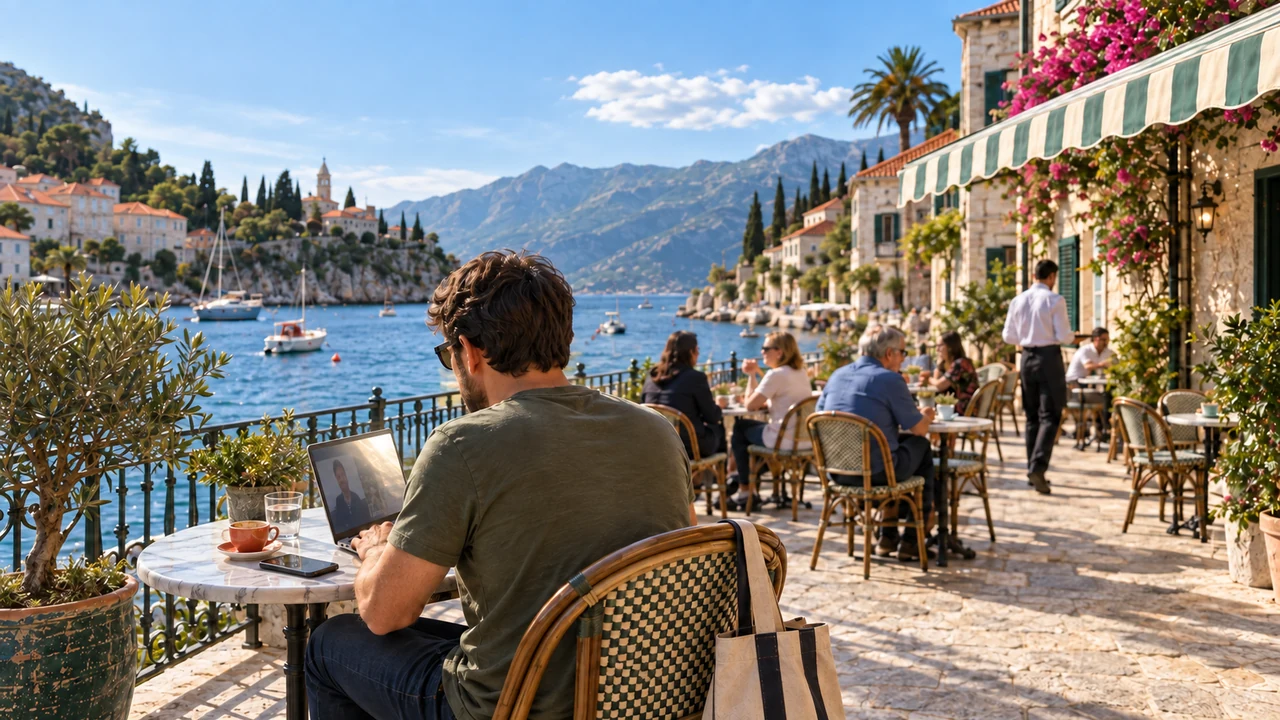
What to check before you sit down with a laptop
Scouting a café takes about a minute if you know what you’re looking at. Three things decide whether you get a working session or a frustrating one, and only one of them is the Wi-Fi.
Where are the power sockets?
This is the constraint that ends most café workdays. A lot of Budva’s cafés occupy older buildings or open onto terraces, and the outlets cluster near the bar or along one interior wall. On a terrace there are often none at all. A room with thirty seats can have four that stay usable once your battery runs down.
Walk in, find the socket, then pick the table — not the other way around. And leave home charged: a laptop that needs mains power by two in the afternoon has already narrowed your options to whichever two tables are free.
Why café Wi-Fi fails before it runs out of speed
The line coming into the building is rarely the problem. What you’re actually sharing is one router with everyone else in the room, and at lunchtime in season that’s a roomful of phones streaming, uploading holiday photos and running maps. The connection doesn’t get slow so much as unpredictable — fine for ten minutes, unusable for the next two.
Test it properly before you commit to the seat. A speed check tells you something, but the more useful test is to start a video call and watch it for thirty seconds. Upload is the number that matters for calls, screen shares and sending files, and upload is the first thing to collapse when a shared connection gets busy.
Noise, seating and the four-hour mark
Café chairs are built for a short visit, and your back finds out around hour three. Table height is usually wrong for typing. Music gets louder as the afternoon turns into the evening, and the espresso machine sits somewhere in the middle of everything.
Terraces trade one problem for another. The view is the reason you came to Montenegro, but sun on a screen makes it unreadable by mid-morning, and wind across a laptop microphone turns any call into a struggle for whoever is on the other end.
How Budva’s season changes the answer
Budva is a summer resort town, and that does something to cafés no general guide accounts for. The same room is three different places depending on the month.
In May, early June and from late September through October, cafés in Budva are close to ideal. Tables are free, staff have time, the shared connection is carrying almost nothing, and you can sit on a terrace for three hours without anyone needing the seat. If you are visiting in the shoulder season and testing whether café work suits you, this is the version you’ll experience — and it’s the most flattering one.
July and August are a different town. The population multiplies, every terrace on the promenade is full from late morning, and a laptop spread across a four-seat table during the lunch rush is awkward for everyone. The Wi-Fi is carrying holiday traffic. You can still work, but you are competing for the room.
Winter flips it again. Many seasonal places along the water close entirely between November and March. What stays open is in the Old Town and on the residential side of town, which is quieter and often better for work — but the choice narrows a lot.
So don’t build your work routine around the café you loved in May. Build it around what the calendar will look like in July, and treat the quiet months as a bonus.
What a café day actually costs
Working from a café feels free because you were going to buy a coffee anyway. Add up an actual day and the picture changes.
There’s an unwritten rate for the table, and it’s roughly one order every ninety minutes. A coffee to start, water, something at lunch, another coffee to get through the afternoon. Count the orders rather than the prices and the arithmetic does itself: three or four across a working day, at coastal prices, in season. That lands close to what a day at a desk costs — and you still don’t have a guaranteed socket, a locker for your laptop when you go to the bathroom, or a room you can take a call in.
For comparison, a day at MONTECO is €15, VAT included. Internet, electricity, parking and cleaning are in that price rather than added to it. If a week or two of it works for you, half a month is €140 and a full month €280 — at which point the per-day figure drops well below what the café table was quietly charging you.
Prices checked 21 September 2026. MONTECO rates are those published on the pricing page and include VAT. Café spending is a pattern, not a quote — coastal prices move with the season. Confirm current figures before you budget.
The line a café can’t cross
Everything above is a matter of comfort and cost. Four situations aren’t — they’re the ones where a café stops being a workable choice at all.
Calls. Your side of a call in a café is usually fine. Their side hears the grinder, the street and the table next to you. On a terrace they hear wind. And it runs both ways: everyone around you hears your client, your numbers and whatever you were supposed to keep quiet.
Confidential work. Screens are readable over a shoulder from further away than people think. Contracts, salaries, client data and anything under an NDA don’t belong on a terrace in a town where you keep running into the same people.
Open networks. Café Wi-Fi is shared and usually unencrypted. For email and browsing it’s fine. For banking, company systems or anything you’d be uncomfortable losing, use your phone’s hotspot or a VPN.
Days with a hard deadline. When a large file has to upload and land, a shared router at lunchtime is a bad place to discover that upload is the first thing to go.
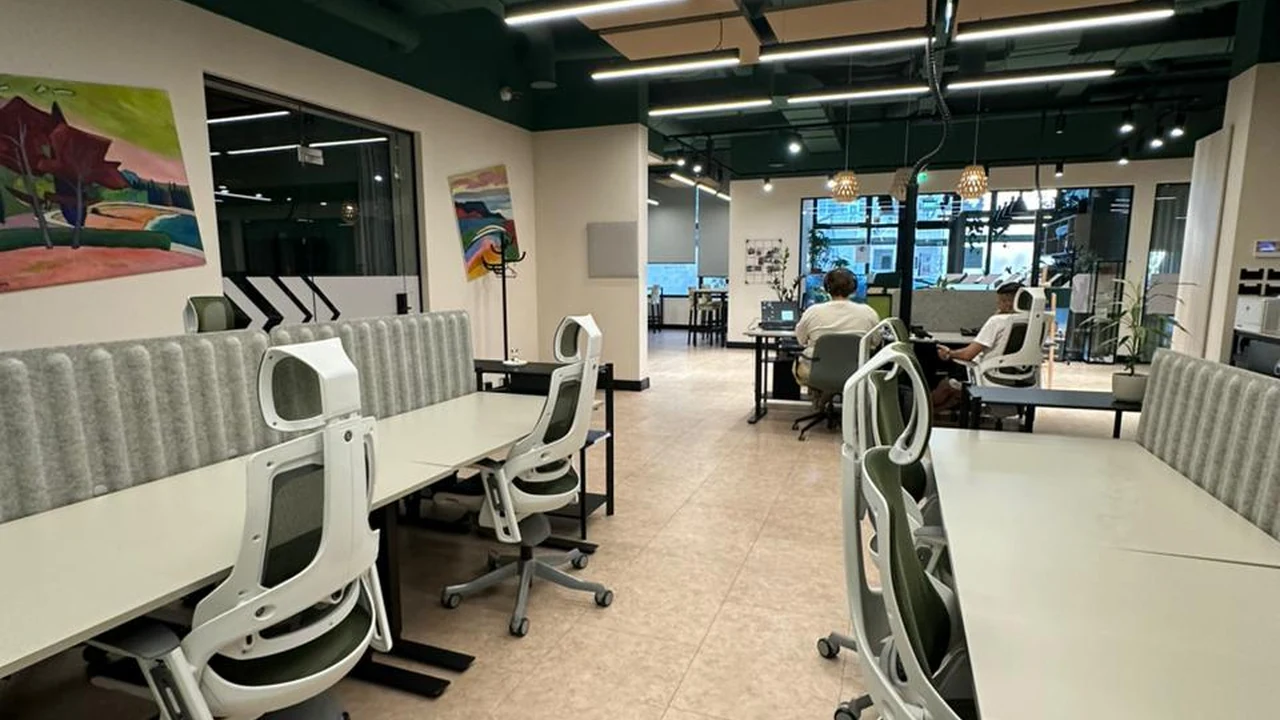
This is where a dedicated workspace earns its keep rather than just being more comfortable. At MONTECO the internet runs to 100 Mbps through two independent providers, so one outage doesn’t end your day, and two phone booths take the calls you can’t take at a desk. For anything with more than one person on your side of the table, the meeting rooms seat 4–6 or 8–10 and come with a TV for online conferences.
Meeting-room rates checked 21 September 2026 against the published pricing page; VAT included. Rates differ for residents and guests and are revised from time to time.
Where cafés still win — and how to use both
None of this makes cafés a bad idea. It makes them good at a narrow set of things, and worth using for exactly those.
They are better than a desk for the afternoon slump, when staring at the same wall has stopped producing anything. They suit reading, editing, sketching a plan, replying to the easy half of your inbox — work where a bit of ambient noise helps and nothing breaks if you lose ten minutes. They’re the right place to meet someone informally. And in your first week in Budva, before you’ve committed to anything, a few mornings in different cafés teach you more about the town than any amount of research.
The routine most people settle into isn’t one or the other. It’s a split by the shape of the day: dense mornings with calls and real work go to a desk, loose afternoons go to a terrace. That way the café stays the pleasant part of the day rather than the reason a call went badly.
If you’re weighing up where to base yourself more permanently, the wider picture on this coast is worth a look first.
Settling into a work rhythm in Budva
The choice was never café versus coworking in the abstract. It’s a question you answer each morning by looking at the day ahead: how many calls, how much focus, how much needs to stay private. Cafés cover a real part of that, and on this coast they’re a pleasure. They just can’t cover the part with a client on the line and a deadline at five.
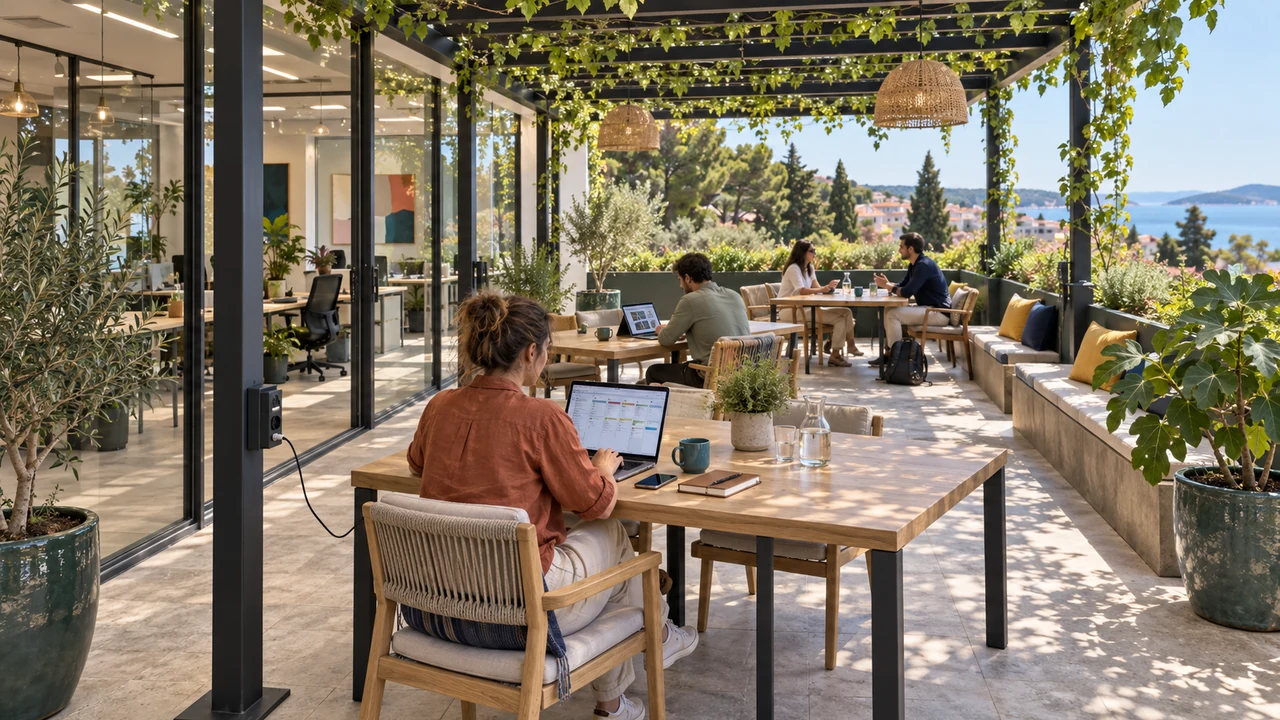
The split doesn’t have to mean two locations, either. MONTECO has its own café and outdoor terrace on site, so the change of scene is a flight of stairs rather than a walk across town — the coffee without the hunt for a socket.
A day pass is the cheapest way to find out whether a desk suits how you work. Spend one there, see how much you get through, and compare it honestly with your last full day on a terrace.
Frequently Asked Questions
Are cafés in Budva laptop-friendly?
Nobody will move you on — staff here are relaxed about how long you stay. But the rooms are built for short social visits rather than working days: small tables, chairs made for twenty minutes, and power sockets only in a few spots. Two hours works well; a full day rarely does.
What is the Wi-Fi like in cafés in Budva?
It varies by venue and, more importantly, by hour. The connection into the building is usually fine; what you share is one router with everyone in the room, so it turns unpredictable at lunchtime and in high season. Upload speed drops first, which is why calls and file transfers suffer before browsing does.
Can I take video calls from a café in Budva?
Technically yes, reliably no. The other side hears the coffee grinder, the street and — on a terrace — the wind, and everyone around you hears your call. For anything with a client or colleagues, use a phone booth or book a meeting room.
How much should I order to justify working in a café?
The unwritten rate is about one order every ninety minutes. Over a working day that’s three or four orders, which at coastal prices in season comes close to what a coworking day pass costs.
Is a coworking space in Budva more expensive than working from cafés?
Once you total the orders, the two sit close together. A day at MONTECO is €15 including VAT, internet, electricity and parking; half a month is €140 and a month €280, which brings the daily figure well below a café habit. Prices checked 21 September 2026.
When is the best time of year to work from cafés in Budva?
May to early June and late September through October. Tables are free, the shared Wi-Fi is uncontested and you can hold a terrace seat for hours. July and August are the hardest months, and many seasonal places by the water close from November to March.


Leave a Reply