




Meeting Room vs. Conference Room: Types, Layouts and How to Choose
The meeting room vs conference room question trips people up because the two overlap — both are rooms where people sit down to talk. The short version: a meeting room is smaller and informal, built for everyday collaboration, while a conference room is larger and more formal, built for presentations, training, and high-stakes meetings. But the name is only half the decision. The layout inside the room — how the seats and tables are arranged — often matters more than what you call it.
In this story
This guide settles the naming question, maps the related room types you’ll run into (boardroom, huddle room, training room, auditorium), walks through the main seating layouts and what each is for, and gives you a simple way to match the room to your meeting. It closes with the part most guides skip: how to get the right room when you don’t own one, by booking it for the hours you need.
What’s the difference between a meeting room and a conference room?
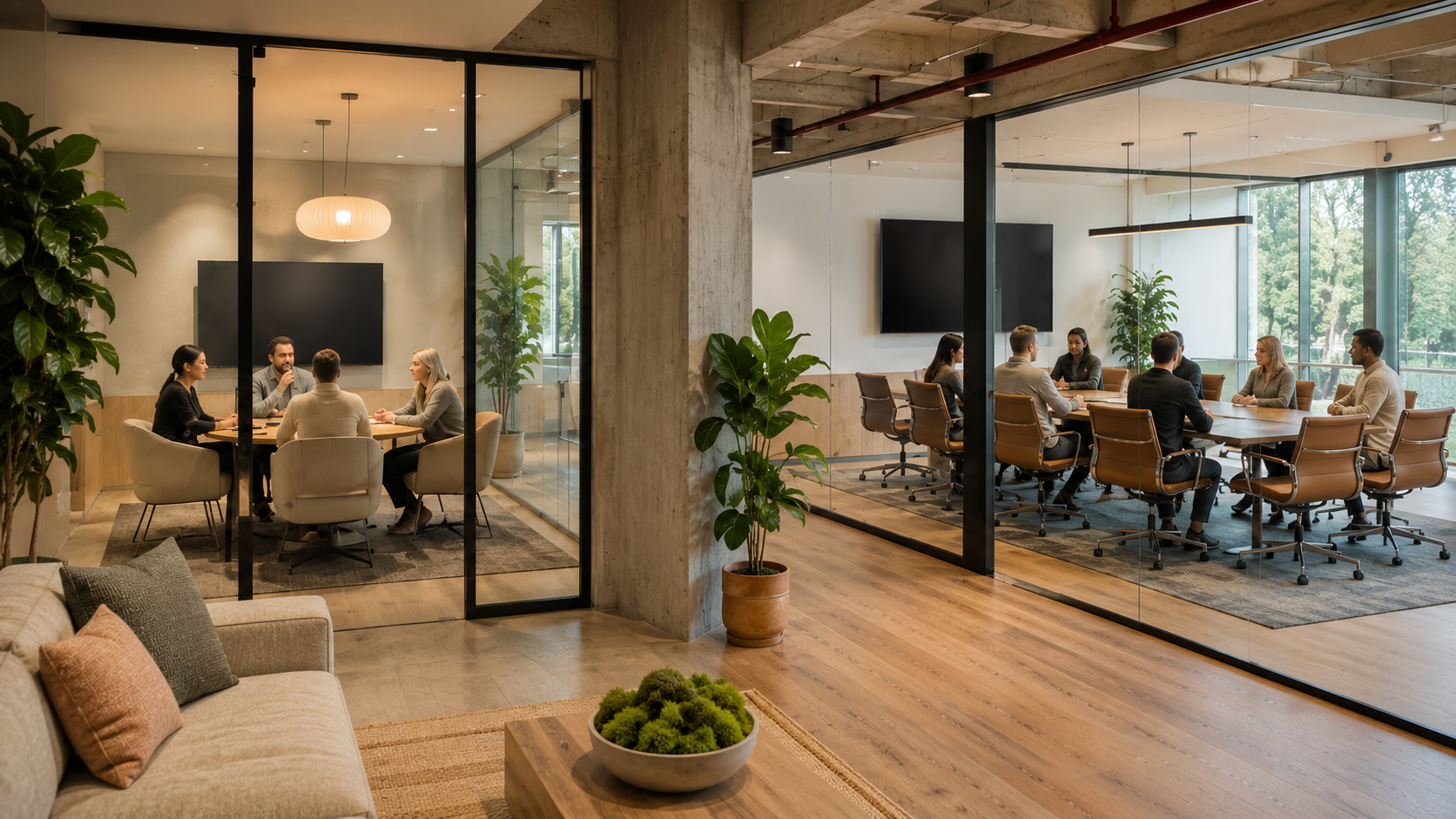
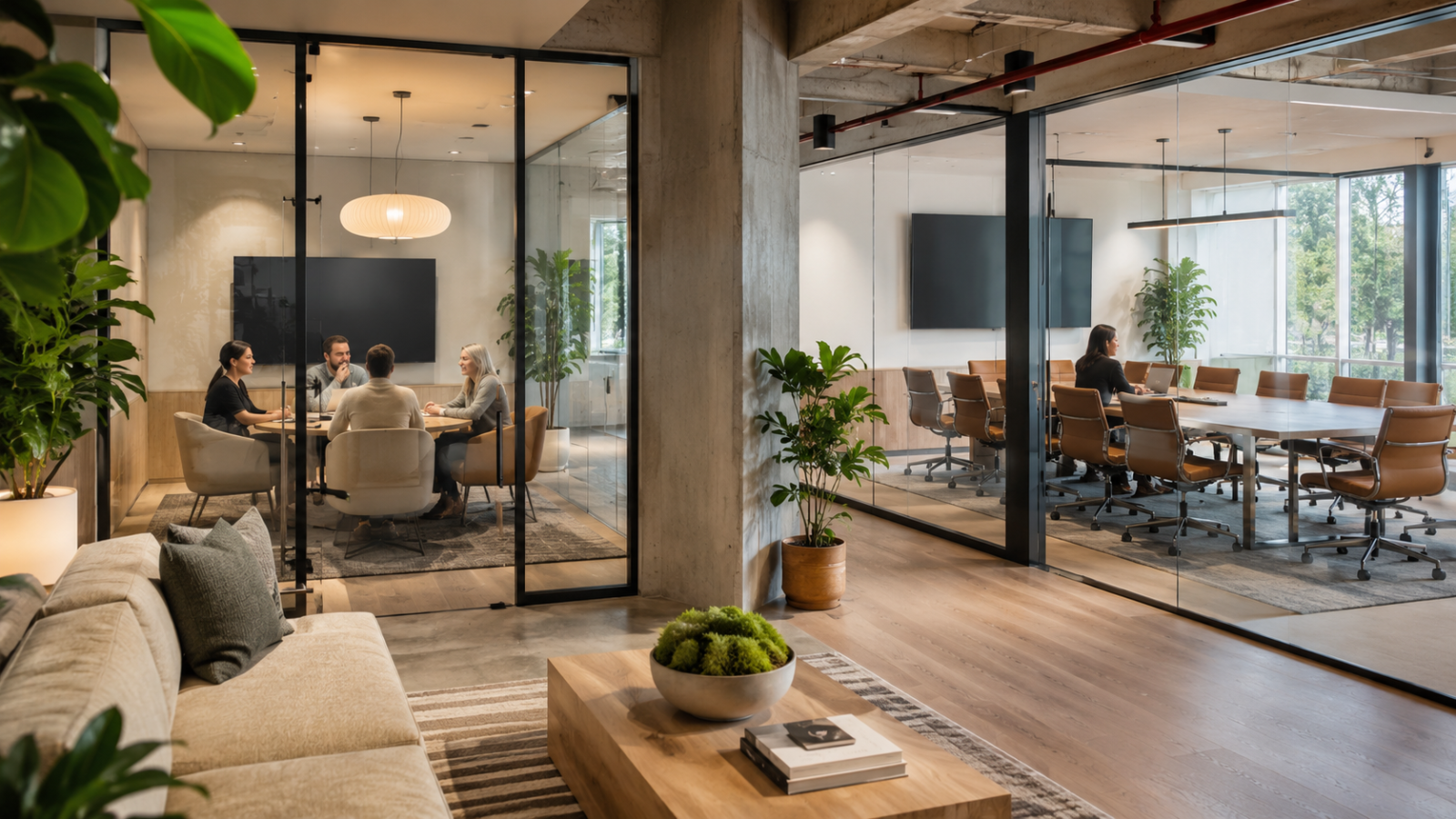
A meeting room is a small, flexible space — roughly 3 to 15 people — with light kit: a screen, a whiteboard, maybe a speakerphone. It’s the room you grab for a stand-up, a one-to-one, or a quick brainstorm, and it’s designed to be casual enough that people speak up. A conference room is larger and more formal — usually 15 to 50 or more — with proper AV, video conferencing, and a fixed layout around a big table. It’s where board meetings, client presentations, and training sessions happen, and the formality is part of the message.
The ranges overlap around 10 to 15 people, which is exactly where the names blur. When in doubt, decide by the job, not the label: pick the smaller, informal room when you want people relaxed and talking, and the larger, equipped one when you need to present, impress, or run a structured session.
Where boardrooms, huddle rooms and training rooms fit
“Meeting room” and “conference room” are the headline terms, but a few more room types come up when you start booking spaces, and knowing the vocabulary saves confusion. A boardroom is a conference room dialed up for governance — executive meetings, investor sessions, confidential negotiations, often with minutes formally recorded. It seats around 8 to 20 at a single table, with soundproofing and premium AV, and it carries weight that can intimidate junior staff, so it’s not the place for a casual team chat. A huddle room is the opposite: a micro-space for 2 to 6 people, made for fast check-ins and spontaneous problem-solving. A training room is set up for learning, with writing surfaces and clear sightlines to a facilitator, and an auditorium is the largest format, built for lectures, all-hands, and presentations to a big audience.
Meeting room layouts and seating arrangements
The same room changes character completely depending on how you arrange it — and the usable capacity changes with it. A room that seats 24 in theatre rows might hold only 12 to 16 once you set it up as a boardroom. As a rough planning guide, allow about 20–25 sq ft per person for theatre seating, 30–35 for classroom, and 40–50 for a boardroom or conference setup. Here are the layouts you’ll be offered and what each does best.
| Layout | Best for | Typical capacity |
|---|---|---|
| Boardroom | Board meetings, decisions, interviews — everyone faces each other | 6–16 |
| U-shape | Training and workshops with a presenter and discussion | 10–25 |
| Classroom | Lectures and training where people take notes | Rows, scales with room |
| Theatre / auditorium | Large presentations, all-hands, webinars (no note-taking) | Maximum — chairs only |
| Cabaret / crescent | Workshops combining a speaker with small-group work | Round tables, open side to front |
| Banquet | Meals, networking, team-building | 8–10 per round table |
| Hollow square | Collaborative meetings with no single focal point | Under 30 |
| Huddle | Quick check-ins, one-to-ones, fast brainstorms | 2–6 |
How to match the room to your meeting
Work through five questions and the right room usually picks itself: what’s the objective, how many people, how much interaction you need, what AV the session requires, and whether anyone joins remotely. From there the common pairings are straightforward. A board meeting or a job interview wants a boardroom. Training or anything with note-taking wants classroom or U-shape. A facilitated workshop suits U-shape or cabaret. An all-hands or a keynote needs theatre or an auditorium. A quick team sync belongs in a huddle room. And a meal or networking event calls for banquet or cabaret rounds.

Two factors increasingly override the rest. If the meeting is hybrid, check the camera and microphone coverage before anything else — a perfect layout fails if remote attendees can’t hear the back of the room. And if the meeting is confidential, prioritise soundproofing and privacy over capacity or polish.
Renting the right room instead of owning one
Most guides assume you’re choosing among rooms your company already owns. If you don’t — a startup, a remote team, or anyone running a single client meeting or workshop — the smarter move is to book the exact room you need for the hours you need it, and skip the cost of maintaining a conference room that sits empty most of the week. A coworking space makes that practical: a range of rooms in different sizes and layouts, with AV and reception built in, bookable by the hour or the day.
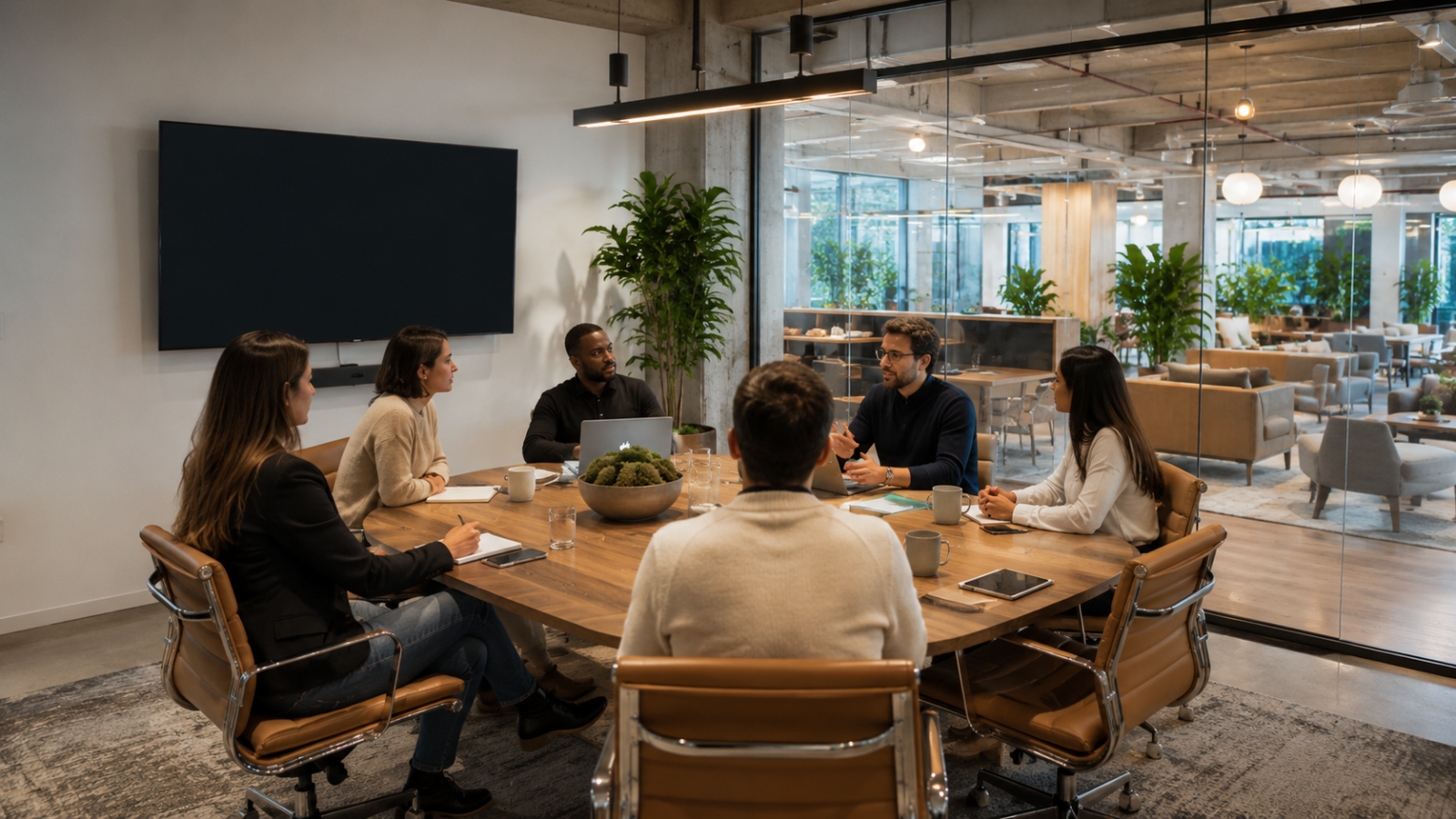
When you book a third-party room, check four things: the real capacity at your chosen layout (not the theatre-max number), the AV and screen-sharing setup, soundproofing if the meeting is sensitive, and camera and microphone coverage for any remote guests. At MONTECO in Budva, members and visitors can book from 10 fully-equipped meeting rooms with AV, sized for everything from a one-to-one to a board meeting.
For the larger end — a lecture, a seminar, a launch, or any session that calls for theatre or auditorium seating — a dedicated auditorium handles the audience and the AV without you renting a hotel ballroom for the day.
Either way, the principle holds: book the format the meeting actually needs and nothing more — a small room for a focused conversation, or a larger one with the seating layout that fits the session.
Choosing the right room in Budva
So the meeting room vs conference room choice isn’t really about the name — it’s about matching the size, the formality, and the seating layout to what the meeting needs to achieve. Settle the format first, then the room follows. And if you’d rather not own a room that sits idle most of the week, booking the right one by the hour gives you a boardroom, a workshop space, or an auditorium exactly when you need it. To see which room fits your next meeting, take a look at the meeting rooms at MONTECO and book the format that suits the session.
Frequently Asked Questions
What is the difference between a meeting room and a conference room?
A meeting room is smaller (about 3–15 people) and informal, used for everyday collaboration like stand-ups, one-to-ones, and brainstorms. A conference room is larger (about 15–50+), more formal, and equipped with full AV for presentations, training, and board-level meetings.
Is a boardroom the same as a conference room?
Not quite. A boardroom is a conference room set up for executive governance — formal decisions, confidential discussions, often with minutes recorded — seating around 8–20 with premium AV and soundproofing. A conference room is more versatile and holds a wider range of meeting types.
What are the main types of meeting room layouts?
The common ones are boardroom, U-shape, classroom, theatre (auditorium), cabaret or crescent, banquet, hollow square, and huddle. Each suits a different mix of headcount and interaction — from face-to-face decision-making to large one-way presentations.
Which meeting room layout is best for training?
Classroom or U-shape. Both give people a writing surface; classroom fits more people for note-heavy sessions, while U-shape keeps everyone in view of the facilitator and encourages discussion.
Can the same room hold different numbers of people?
Yes — capacity depends on the layout. With movable furniture, one room might seat 24 in theatre rows but only 12–16 as a boardroom or U-shape. Always check the capacity for the layout you actually want, not the maximum figure.
What is a huddle room?
A small, informal space for 2–6 people, used for quick check-ins, one-to-ones, and fast brainstorms. It’s the lightweight alternative to booking a full conference room for a short conversation.

Leave a Reply